How Messed-up am I?

A few months ago, I took three friends to see Heathers: the Musical. I was really excited because I loved the movie and wanted to see how the dark humor would translate into song form. It wasn’t until we arrived at the theatre, with the movie playing in the foyer, that I learned that none of the people I had invited had ever seen the movie. It went downhill from there, and I was lucky to get them to even come back to our seats after intermission. At our wine bar postmortem, I agreed that perhaps the black comedy did not translate into singing and dancing, then found myself reading articles about how the movie itself is more than problematic. It led to me to wonder…is there something wrong with me that I love movies like Heathers, Drop Dead Gorgeous, and Jawbreaker?

Because I genuinely thought we were all in on the joke. It was Mean Girls ad absurdum, right? If the popular girls at Westerburg High are murdering each other with Drano and Regina George runs out in front of a bus, then surely the petty dramas happening at my school couldn’t be taken seriously. We actually had one of those “all sophomore girls report to the gymnasium for an intervention” meetings at my school, except it took place in the counselor’s office and only included the mean and popular girls, so there was none of the democratic, kumbaya equality of “look, the field hockey girls have problems too!”

When I read Jia Tolentino’s New Yorker piece on how Drop Dead Gorgeous bombed critically but is possibly her favorite movie, I felt so validated. I’d loved it too, and I can remember watching it in my freshman dorm with a bunch of other girls. I’m going to have to bow to Jia here, because she’s just that good: “The black comedy of Drop Dead Gorgeous is guided by a deranged value system that’s particular to the world of teen-age girls…But what Drop Dead Gorgeous understands so well is that being a teen-age girl is, in fact, deranged and dehumanizing and frequently unsubtle.” See?

Finally, Jawbreaker, with it’s breakout role for Judy Greer, one of our most consistently underrated comedic actresses. And let us not forget the Noxzema Girl! Her very existence on magazine pages throughout the 90s was probably the single worst contributing factor to my insecurities about my skin. And hair. Jawbreaker is arguably the most messed up of the three (Marilyn Manson’s cameo), but it also has Pam Grier.

Because I’m tired and struggling to finish here, I just followed the Wiki links and confirmed another name for what I’m talking about is “gallows humor.” One of the oldest and best examples finds Mercutio making a bad-pun dad joke after he is mortally wounded by Tybalt (setting into effect the entire tragic chain of events):

“…ask for me tomorrow, and you shall find me a grave man.
[He dies, offstage, but not before cursing everyone.]

The Editor in Sharp Objects

On Sunday, I wrote about writing in my reading journal, which I still think is a good habit to have, even at the age of 37. It helps me keep track of my reading (my post about Goodreads is coming tomorrow) and to process the things I have read. I consume so much longform nonfiction now that I struggle to remember when and where I came across a certain idea, so the journal has been a lifesaver when it comes to research. I have also noticed some patterns in my own life and career.

The stories from last week that inspired me included:

  1. Judy Maggio on Austin homelessness in a Decibel Facebook post and the actual airing on KLRU.
  2. A New York Times Instagram post about the Port Authority ladies’ room.
  3. A book review of The Grammarians, also in the New York Times, from which I receive biweekly email newsletters.

Sometime during my transcription of quotes I liked from the third article, when I was sated but still refusing to stop, I hit on a connected topic I had wanted to write about several months ago but forgotten. All the truly good story ideas by/for/about women inspired me to remember how dearly I loved the male editor in Sharp Objects, and how desperately I want one of my own.

I have not read the Sharp Objects book but did read Gone Girl and am familiar with Gillian Flynn’s journalistic background and Missouri upbringing. A friend had recommended the HBO series to me when it first came out a year ago; when I did finally get around to watching it, the delightful creepiness gave me all the right kinds of chills. Details like the hand-painted silk wallpaper (not to mention the ivory floor) are still haunting me. I think the French director’s postmortem recaps helped, too. Without posting too many spoilers: the male editor’s unwavering support of the main character, an alcoholic journalist, elicited an audible sob from me at one point during the finale.

In real life, I have lost yet another editor; this time, however, it was through no fault of my own. I am possibly about to get a male editor, and I’m apprehensive, to say the least; I have not had the best luck with them. I did some reminiscing, and I realized that I have not had a male editor in over a decade. As a result, I have been replaying a lot of the “learning opportunities” they provided at the start of my career. (This is not a Shitty Media Men type of thing; I just learned early on that I work better with women.)

The male editor in Sharp Objects, however, is a truly good, kind-hearted male editor who provides professional and emotional support to his protégé, even while he undergoes a round of chemotherapy. Near the end of the series, when Camille has written the piece that sums up the emotional journey she has taken, he praises: “That’s beautiful copy.”

Clean Living

I missed a few days writing, but with good reason: not only did class start Friday, but I had two articles due for my freelance magazine gig. I have been writing and thinking about writing plenty; I do not have anything to prove. (I did draft one angry essay, but it was mean-spirited and petty–so I reworked it and have scheduled it to publish tomorrow!) Still, the ideas and stories were swirling; I just needed a quiet moment to collect my thoughts into the five-paragraph format.

On Friday, after meeting my class, writing encouraging comments about their introductory assignments, submitting my articles, and turning down an emergency request to write another (well, not so much turning down as politely setting firm boundaries), I dozed off in the living room armchair from 5:15 to 5:40 p.m. BECAUSE I AM YOUR DAD. I finally regained the will to live and started reading wonderful, inspiring articles on my phone and enthusiastically celebrating them in my reading journal (a holdover from my own student days). I then watched the public television report on homelessness in Austin while eating a salad. This was my Friday night.

As we moved into Virgo Season last week, Madame Clairvoyant had this to say: “Virgo is focused on health and care and living a good life inside this human form.” Her advice paired nicely with Jia Tolentino’s essay about chopped salads in the the Guardian (also in her new book of essays, Trick Mirror, though I have not procured a copy), which I have been pushing on damn near every female in my life. All of that paired nicely with the final episode of a beloved, bingeable Netflix show to form a clean-living philosophy that carried me through the last week and into that armchair to kick off my mild-not-wild Friday night at home with a kickass early-evening nap.

The seventh season of Orange is the New Black was released back on July 26, the start of Leo Season, not Virgo. However, since this was a show that himself and I shared (he hooked me by asking about one of the books in the prison library), we only got organized enough to finish the show together in the week before last. I actually watched the last two episodes without him (Something came up! He insisted!), which worked out well because I cried like a baby. In addition, without spoiling too much, Piper has a line about clean living, voiced over a shot of her hand-washing dishes and placing them in a counter-top rack to dry. The visual of such a simple ritual stuck with me.

On Saturday, after a date night that included a trip to the planetarium and some frozen yogurt, we were home by 9:30 p.m. I dozed off on the couch, phone-scrolling while the start of college football season continued on the TV. I swear I heard one of the color commentators, after a player eked out a touchdown from underneath a dog pile, declare: “That’s clean living right there.”

That One Night

The first essay I assign to English Comp students is descriptive, which is supposed to be the most accessible rhetorical mode, though the restraints can be frustrating. Description is usually best when blended with something else, the way a bottle of inexpensive merlot can be used to cook an exotic dish. I tell students to fall back on the five senses when writing description, and last night, I explored the sense of smell.

My first foray into scented TV occurred in 1994 with the aromavision episode of Living Single. Evidently, May 8 marked the “interactive entertainment” event on Fox, featuring a 3D Married With Children and much more subdued, sustainable fan interaction from Martin Lawrence and George Carlin. I vividly recall one Living Single character (either Sinclair or Max) dumping half a bottle of maple syrup on her breakfast (either waffles or pancakes).

I could get lost in a web dive of archived articles and 90s nostalgia collectibles, but what they cannot tell me is if I am actually remembering the smell of the cards, or if I even had them in the first place. There is a very real chance I simply watched show, saw the scratch-and-sniff prompt on the screen, and conjured the scent of maple syrup. I felt a similar sensation last week, when I realized I had waited too long to order my Office smell-a-vision card, and yesterday morning, when I got a reminder email (strange, because I had never gotten an email from Cozi TV before, but I just live with the assumption that social media algorithms have infiltrated my entire life). I mentioned to my boyfriend, who has lost patience with my Office viewing habit, how bummed I was to miss it.

A few hours later, he found some of my mail in his truck: “I’m sorry; this has probably been in here for a week.” I was too overjoyed to be annoyed, because he had made it just in time. I opened the envelope from Cozi TV, 30 Rockefeller Plaza, New York, NY 10112, and read the warning slipped in with the card: “This thing stinks…pungent…oppressive odor…smell ya later!” The card did indeed emit odors without provocation. As 9 p.m. approached, I made popcorn and hoped the smell would not interfere.

The smell-a-vision episode, entitled “The Dinner Party,” is a cringe-worthy social gathering set in Michael’s condo. The first sniff, Serenity by Jan’s Bonfire candle, was essentially liquid smoke. It filled the air and all nostrils, dominating the rest of the evening, in fiction and real life. Andy’s floral bouquet was barely detectable, and the red wine blended with Bonfire to produce a peaty whiskey finish on the nose. Host Melora Hardin told us the scratch-n-sniff company did not manufacture an Osso Buco flavor, so their work-around mixed beef with onions. The cheeseburger smelled similar, but with pickles, babe. Scents of Bonfire and Osso Buco fought it out until I put the card into a Ziploc bag—it is a collectible, after all.

Rom-Coms

Sometimes, when I am asked my favorite movie and not feeling self-conscious enough to prove anything to anyone, I will answer with Romancing the Stone. After probably eighty viewings, I still get a kick out of how the playful plotting takes great pleasure in toying with the protagonist, a “mousy” romance novelist. The movie is constructed as a postmodern approach to rom-com, which is a genre ripe for reinvention. A few years ago, They Came Together tried the satirical approach, and it could have been a much funnier movie. Book Club celebrated more mature women and is set for a sequel, but I can’t forgive how the alleged “book club” only met twice and simply used 50 Shades of Grey as the clunky, out-of-date-even-as-a-joke impetus for sexcapades. A new spate of rom-coms, however, might revive the genre for me.

There was a day a few months ago when I watched two Netflix rom-coms in a row. I don’t know what was wrong with me either, but it was a turning point. The first was Always Be My Maybe, an allusion to a Mariah Carey song women my age remember from our formative years. The second was Someone Great. I can’t remember what drew me to that one, but it certainly wasn’t the forgettable, had-to-google-it-just-now title. Both rom-coms, however, were refreshingly not white. I recognized the plot structure, the tropes, and the unrealistic careers/apartments/sex lives, but I also got to see new-to-me cultural backgrounds, bodega singalongs to Selenas, and Asian-American Keanu playing Asian-American Keanu (with a bonus of Darius from Atlanta). It kept me entertained enough to care what happened with each character’s relationships.

Allie Wong in ABMM was the more genre-breaking of the two, as her celebrity chef character struggled to maintain a romance with a less successful partner. The San Francisco setting was a refreshing change of pace, even slightly reminiscent of a beloved rom-com oddball, The Sweetest Thing with Cameron Diaz, Christina Applegate, and Selma Blair (plus some decent dudes).

Still, it was Someone Great‘s “Hot Child in the City” fantasy of a career girl in New York that hooked me yet again. I had never seen Jane the Virgin, but Gina Rodriguez simply lit up the screen. Her supporting cast included DeWanda Wise as the LGBT character and Brittany Snow as the basic white girl, though in this one she is relegated to comic relief: they make fun of her shoulders-back posture and delight when she gets stoned enough to binge on carbs. The getting-ready-to-go-out scene (again, a callback to The Sweetest Thing‘s mocking makeover montage) is a microcosm of the whole viewing.

My literary friends like to refer to “palate-cleansing chick lit” as a way to take a quick break from a certain type of self-serious literature. Likewise, we all have our tried and true rom-com guilty pleasures. In recent years, mine have been limited to reruns of Sex and the City and anything involving a scuba-diving McConaughey. Now, maybe I can enjoy the genre again. 

Editorial Vision

“Nevertheless, we will persist. I refuse to cancel a pitch meeting on account of that man.”
–Jacqueline Carlyle on #45 in Before Tequila Sunrise (a bottle episode with a very sentimental name)

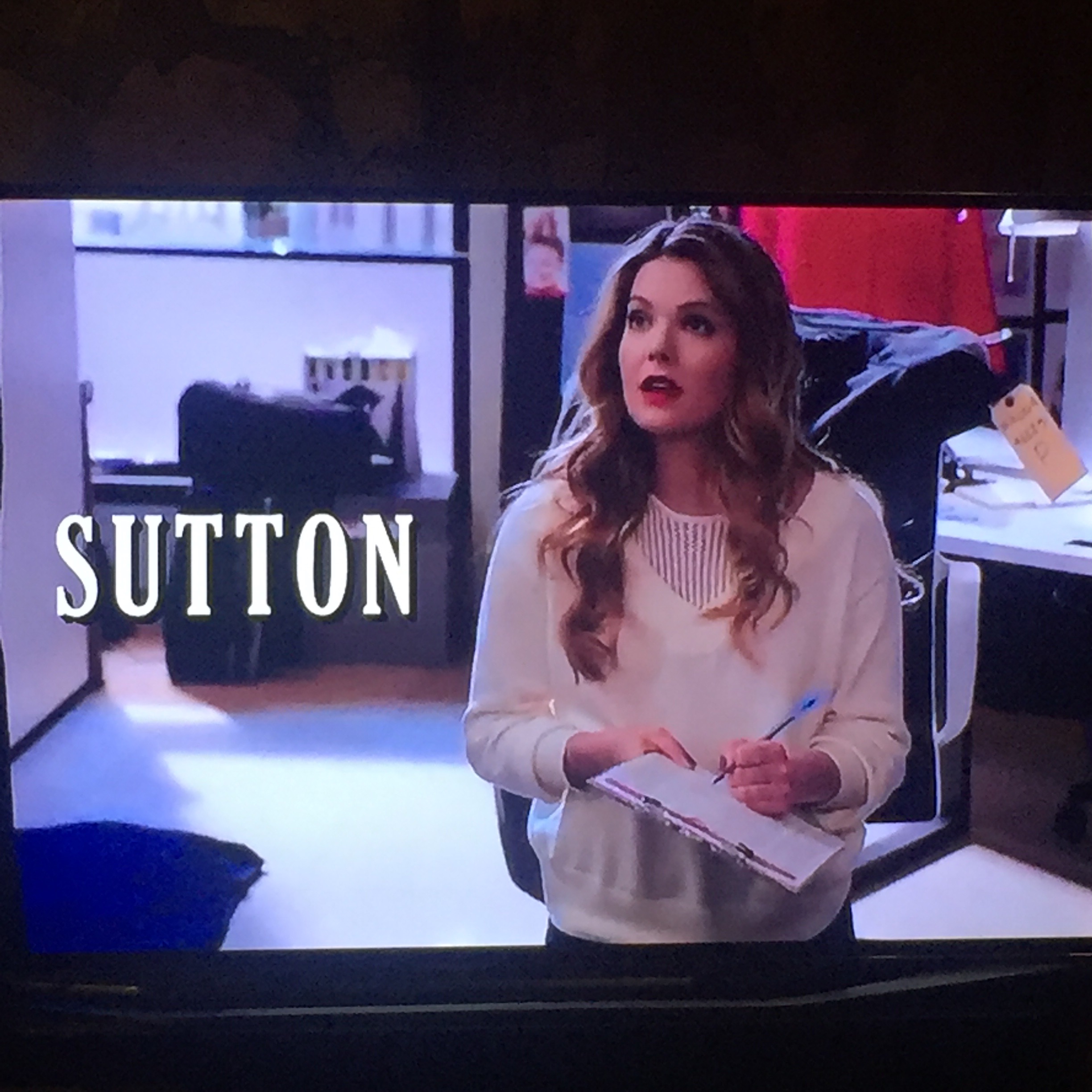
I’ve been watching The Bold Type, getting in touch with youthful idealism and all that. I like all the girls, most of all Sutton. 


But the character that makes the show for me is Jacqueline: Melora Hardin, AKA Jan Levinson-Gould from The Office, songstress of the most cringe-worthy rendition of Son of a Preacher Man ever.

(Also, Ryan (Pinstripe) from The Bold Type resembles Ryan from The Office. Just sayin’.)

Jacqueline is decidedly not a devil in Prada. She really believes in her girls, and I learned a lot from watching how she lets them do their jobs. When Pinstripe recommends Jane imagine herself in Jacqueline’s chair, that was actually very good advice. Do you want the top job in your company? If not, then why are you there?

I did not know until Episode Nine that the show is based on the life of Cosmo editor-in-chief (not editor-at-large) Joanna Coles. But the Cosmo connection is fairly apparent, as is the Nora Ephron influence.

[SPOILER ALERT]

When Jacqueline takes the weights in the season finale and shares the story of her own rape, I cried. It happened over twenty years ago when she started her journalism career, right when she was about the age of the girls in The Bold Type. Did she think about reporting it?

“Not even for a second. That would have ended my career; or at the very least, defined it […] Me pushing you on this story was misdirected. It was not about you, it was about me.”

Which brings me to the heart of my love for Jacqueline, and probably the heart of The Bold Type, once Jane comes back around.

You have to believe in the publication. It’s the big sister you never had, or whatever. If they are not doing work you can support, not pushing you in the right direction, you have to separate yourself.

I left a freelancing gig a year ago because it became painfully clear I did not share the editor’s vision. She butchered one of my stories to the point that it alienated a source and made her regret trusting me with her story. That, I can not abide.

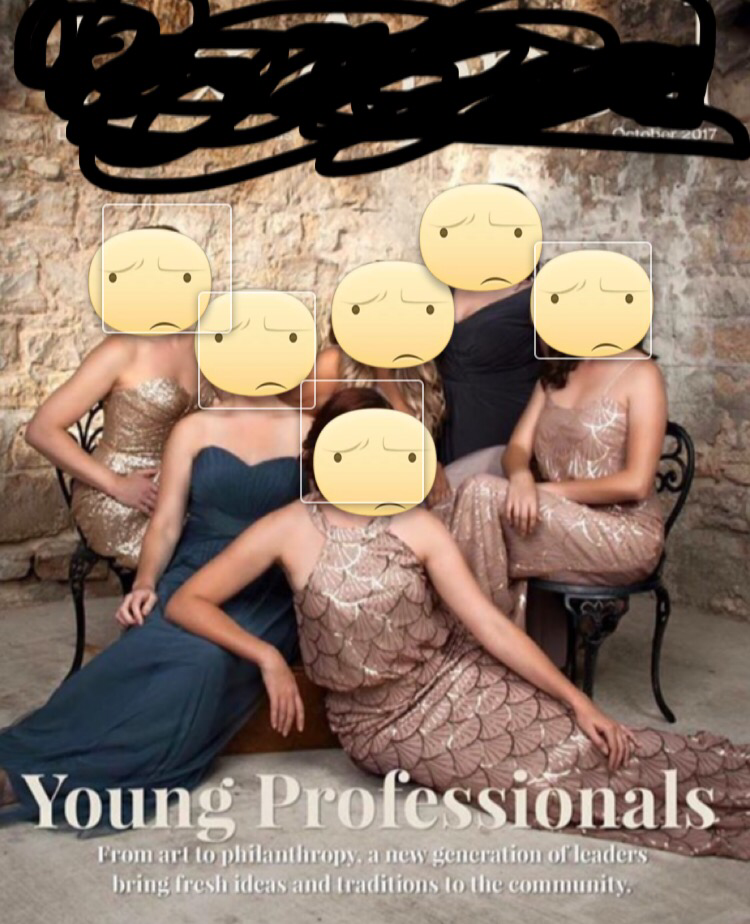
And thank God I got out, because this is the cover of that publication’s latest issue:


Oh boy. Yes, that is an extremely beige photo shoot. As a formerly entrenched young professional in the community this publication claims to serve, I can confidently say this cover does not represent the diverse, youthful, and inclusive group of career-minded women I encountered every day. All this represents is a limited editorial vision. I’m glad I got out when I did. (There is also a glaring grammatical error: generation is singular. It should be “a new generation of leaders brings fresh ideas.”)

When you’re young and trying to make your name as a writer, you sometimes go along to get along. Once you get a bit older and wiser, you learn how to take a stand. If something doesn’t feel right, by all means get out. You don’t want this on your hands.

The Handmaid’s Tale

We got an Amazon Fire Stick, which, OMG, changes the entire unemployment landscape. Shows that were previously unavailable to me, like my beloved Canadian soap opera Being Erica, are now a click away. So I immediately binged Hulu’s adaptation of Margaret Atwood’s The Handmaid’s Tale.

Episode One:

The ear tag. I was just thinking yesterday how I never got one of the cartilage piercings (some girls just looked better in them), and here we have an ear tag with a serial number on it.

Margaret Atwood’s cameo at the Red Center–laughed out loud.

Something from the book, and history–they lock up the Bible so servants can’t read it. The Bible.

The salvaging was done completely wrong, though. That’s not Offred. In the book, that’s one of Ofglen’s shining moments. [Editorial note: within the context of the entire season’s arc, it makes more sense. But we’ve left the book material by this point.]

Ofglen was married to a woman!

Episode Two

June was an assistant book editor! And a preacher’s daughter?!? Maybe? “My father’s parish” can mean he belonged there or he led there.

“Would you like a cookie?” “Aw, isn’t she well-behaved?”

Three Little Birds…and Tears for Fears. Excellent music choices this episode. One of the instructors at my yoga studio has three little birds tattooed on her shoulder.

Episode Three

Barr & Monroe publishing? “You can’t work here anymore; it’s the law now.” That layoff scene had me shook.

So my publishing department was just shut down at work. Eleven people: ten women and one man. The man was immediately offered another job on campus. None of the women even received help from HR to locate another position. They kept one clerk for a few months to help shut the place down and gave her the work of three people to do.

I had to rewind because I though Alexis Bledel’s hair was Rory-Gilmore-short in the first scene and we were looking at two different prison sentences, but it was tucked into her shirt.

Episode Four and Five

Started applying for jobs.


the country girl (1954)

I just went through and published the drafts I had saved in this blog over the past three years. This last one is a bunch of quotes from the movie The Country Girl, the source of this [sic] blog’s name. It was Grace Kelly’s ugly movie, and everyone knows going ugly will get you the Oscar. I feel like this period of my life has been my own ugly movie–it may not look great on the outside, but I’m going to come out of it a winner and go on to become fucking royalty.

– She wasn’t always like that.

– I know.
They start out as Juliets and wind up as Lady Macbeths.

– When I first met her, she was as fine a person as you’ve ever seen.
She had background and breeding.
She had a nobility about her that made me feel proud to be with her.
I was a good deal older than she was, but it didn’t seem to matter.
She wasn’t a flighty kid.
She had a poise and dignity that was ageless.

Those first few years, I never knew a better life.
A wife who was everything I’d been looking for.
A son who was smart, healthy.
Then our son died.
I came home from the theatre one night a couple of months later.
This kid, I don’t think she ever had a real drink in her life before.
There she is, stretched out across the bed, dead drunk,
her wrists cut and bleeding.
She was jealous that I had my work, something to live for.
She felt she had nothing.

Inside of a year, she was a hopeless drunkard.
In an effort to give her some purpose in life,
I made her feel that I needed her in my work.
I let her pick the songs I should record, the shows I ought to do.
She started taking over everything. She became very possessive.
She wanted to make the decisions, had to be with me all the time.
Whenever I was away, she acted as if I’d run off with another woman.
She had fits of depression.
One time she set fire to a hotel suite.

That’s when I hit the bottle.

“Whereas the name Buffy gives it that touch of classic elegance.”

IMG_4549I attended Jessa Crispin’s reading at BookPeople on May 11. I’ve always been a fan of Crispin and had just finished Why I am Not a Feminist: A Feminist Manifesto that day.

The audience, mostly female and younger than I had expected, listened as Crispin read aloud some critiques of the book and responded. She then took questions, one of which essentially asked what entertainment do you find acceptable? (One of the more quotable quotes from the book calls modern feminism “a decade-long conversation about which television show is a good television show and which television show is a bad television show.” Which is hilarious.)

It came out that Jessa Crispin does not consider Buffy the Vampire Slayer feminist, mainly due to the savior complex that plagues every superhero movie. She then joked that she could feel the audience turning against her and quickly changed the subject.

Since I just finished watching Buffy in its entirety for the first time, I was part of the wave of support for the feminist reading, which I admit did not sit well with me until the Beer Bad episode. [Spoilers follow.]

I. Beer Bad

BeerBad

Everyone hates Beer Bad; I thought it was hilarious. Not gonna lie, what screamed “feminist” about this episode for me was the cave slayer clubbing a dude over the head. Up until this point (and this is Season Four) I hadn’t really gotten the feminist vibe from the show. Yes, Buffy was a female hero and kicked ass and did it all 20 years ago, but her movie counterpart had done the same thing five years earlier. (I was a huge fan of movie Buffy. I dressed as her for Halloween when I was 10 years old. I drew my girl power from Kristy Swanson.) I really enjoyed Sarah Michelle Gellar’s acting in this one, though. She always got to do a lot of physical stuff as Buffy, yes, but the body movement here was different and showcased her range.

Want beer

Buffy’s first college relationship was a bad one. A shitty, stupid situation in which we have all unfortunately found ourselves at one time or another, made worse by the fact that she just couldn’t get over him. Parker’s douchebag behavior does give Riley an excuse to punch him, which is awesome. (I also like Riley. A lot. I cried when he helicoptered away from Buffy and I hate that people hate on him. He’s the Aiden–you haters realize that, right?)

Foamy

But before Riley clocks Parker in Episode 4:7, Buffy gets a shot at him in Episode 4:5 and I don’t know why, it just worked for me. Must have appealed to my troglodyte instincts. Plus, there’s a craft beer theme (in 1999, no less). Foamy!

II. Power

Power

Here’s the thing: wherever you are in your feminist journey, keep going. Some of us are further along than others. Case in point: I’m 34 and I just figured this out. Buffy was 20 years old when she learned that she was the one with the real power.

Power. I have it. They don’t.

This bothers them. It’s why they attack you and try to make you feel inadequate–because they are afraid you may realize that they need you more than you need them. And the day you figure that out, you’ll be free. It’s not the same as Buffy undergoing the council’s impossible review, but when you quit participating in the systems that oppress you, you’ll see how badly they needed to you to comply.

Bonus: “That’s Riley-speak.”

III. Every Girl

Every Girl

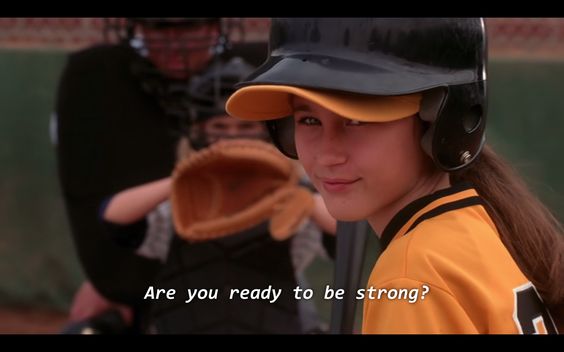
I cried so, so hard at this. And I hated all of the potential slayers. I hated them in the house, I really hated them when they kicked Buffy out of the house, and I was glad when the cockney one died. Still, when every potential slayer in the world got tapped at the same time, I cried like a baby, especially with the little girl at bat.

This is what destroys the savior complex of the show–the idea that it was all leading toward a dispersal of that power, that every one of us could be strong.


“Maybe he’s at some Sal Mineo film festival”

As promised, here’s the post on Tony from 13 Reasons Why.

I’d been dragging my feet on this because of other stuff going on in my life (stuff that required me to write a very “terse” email that will live in LY infamy), but the news of Ross Butler leaving Riverdale (a total mistake IMHO*) has inspired me to get moving again. Zach had been one of my favorite characters in 13 Reasons and, in my opinion, he didn’t really deserve a tape. But he is fucking up Riverdale, home of all iconic gingers, in order to remain in the 13 Reasons universe, so he’s now persona non grata for me. With the death of my other favorite 13 Reasons character (no, not Hannah; spoiler in the link) we’re back to the beloved Tony.

tony-13-reasons-why

Tony Padilla is played by Christian Navarro, a 25-year-old actor of Puerto Rican descent. “Tony has amazing taste,” Hannah says as he spins a school dance. “This song is perfect.” Tony is also an LGBT character, though Clay somehow doesn’t know this and Tony having to tell him he is gay is genuinely funny. Clay also yells at Tony for being an “unhelpful Yoda,” which is a pretty accurate description, but remember Yoda isn’t supposed to be all that helpful at first. He makes you earn it. And Tony repeatedly tells Clay to just listen to the tapes already. Tony is like Clay’s guardian angel, and in a way, he’s Hannah’s avenging angel.
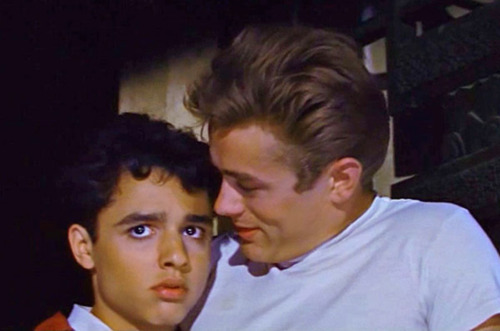
Tony’s storyline does develop, and he has his flaws, too. I just kept thinking how the character seemed to be almost a direct descendant of John “Plato” Crawford in Rebel Without a Cause. The classic tale of teen angst also has an LGBT message, as Plato falls in love with James Dean’s character. The two went on to appear in 1956’s Giant, in which Mineo played a Mexican-American soldier, despite his Sicilian heritage.
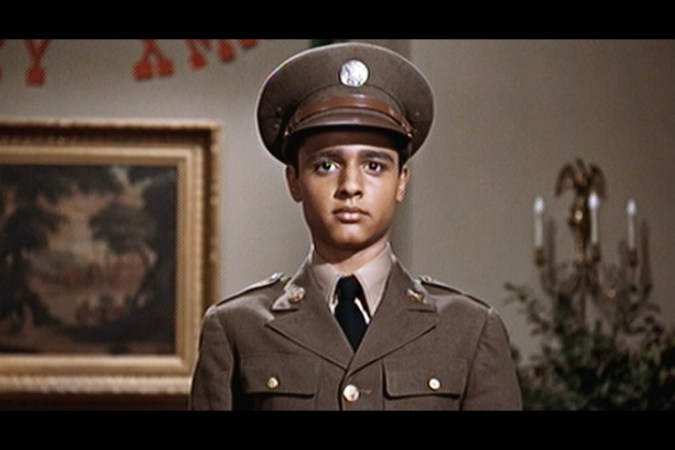
AngelObregonIII’d hit on this Sal Mineo connection during “Tape 5, Side A” (Episode 9) probably about the time Tony helps Clay skip school, so when Wilson Cruz showed up in “Tape 5, Side B,” I almost fell out of my chair.

Real-life LGBT advocate Wilson Cruz plays the Bakers’ attorney in only two episodes, but all 90s teens remember him as Enrique Vasquez on My So-Called Life. Before Willow and Tara, before the kid from that Dawson’s River show, even before freaking ELLEN, there was Rickie. He struggled with his sexuality while Angela (and the rest of us) lusted after Jordan Catalano, only able to say the words when cheerfully confronted by Delia (played by the wonderful character actress Senta Moses) in the very last episode before the show was canceled:

Delia : Okay, but um, you’re gay, right?
Rickie : Well, I, you know, I, I-
Delia : Oh, I’m sorry. I didn’t-
Rickie : No, it, it, it’s okay.
Delia : That came out so rude.
Rickie : No, uh, see I, I try not to, um, no, I, I don’t like, uh- [throws pencil down] Yeah, I’m gay. I just don’t usually say it like that.
Delia : How do you usually say it?
Rickie : I don’t usually say it. I mean, I’ve actually never said it…out loud.

(Episode 19, “In Dreams Begin Responsibilities”)

With Rickie, as with Plato, the sexual orientation is implied more than it is spoken aloud. Rickie has one of my all-time favorite lines in the Halloween episode when he pulls out Angela’s sweater in the girls’ bathroom and exclaims “Oh, look, mohair!” (I don’t know why, I just always thought that was hilarious.) In every high school in the 90s, there was always the guy who, though not quite ready to come out, dressed sharply and palled around with the girls. In episode 15, which features Juliana Hatfield’s guest appearance as an angel and which I just learned was titled “So-Called Angels,” Angela is freaking out because Rickie hasn’t come to school after her parents wouldn’t let him stay with them. Rayanne, telling her to chill, says:

“Maybe he’s coming in late. Maybe he’s at some Sal Mineo film festival.”

It took me a long time to respect the significance of that line, and it’s such a throw-away that I’m not sure many people ever really did. Because of course Rickie identified with Sal Mineo.

(By the way, A.J. Langer is a countess now. And the characters in both My So-Called Life and 13 Reasons Why attend school at Liberty High.)

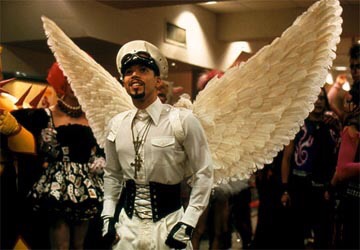
There’s another Wilson Cruz role that has always haunted me, justifiably, because the fate of his character is so gristly. In Party Monster, Macauley Culkin’s Michael Alig makes Angel Melendez deliver drugs around the city in an angel costume. That image of him walking through the deserted city, making his way toward the mayhem in Peter’s hotel room, kept coming back to me every time Tony appeared on screen in 13 Reasons Why. Yes, you’re some sort of angel figure, but guardian angel or avenging angel?
*If played right, this could work in Riverdale‘s favor, and I hope they hit on a brilliant way to recast Reggie. Remember how Shelly Pomroy was played by three different actresses on Veronica Mars? Shelly Pomroy’s party sophomore year was so crucial to the plot of the show that Veronica was still name-checking her in college, but Shelly Pomroy herself was a very minor character and no one really noticed the recasting. They did, however, notice the recasting of Carrie Bishop, played by Leighton Meester in the show and Andrea Estella in the movie. The movie used Carrie’s stage name, Bonnie DeVille, to sort of explain away the transformation, but I always thought it would have been a treat for loyal fans if the murder victim had been Shelly Pomroy instead. That way, when yet another actress was brought in, we would have been in on the joke. Plus, Carrie/Bonnie was too cool of a girlfriend for Logan and I perceive her as more of a threat to his relationship with Veronica, if that makes sense. So if they find a way to riff on the fact that Archie’s great rival Reggie was a non-player in the first season, the recasting could actually be a good thing. I’m still mad at Ross Butler, though.