Author: Mandy
Public Transport Adventure
I flew to California on Groundhog Day to pick up a car; ergo, I am no longer car-free in Austin. What I want to write about here, even though this is supposed to be an Austin-centric category, is the public transport component of that day. And I went all out on public transport, since it was my last day without a car. I would make Bill Murray Groundhog Day jokes if I could think of any, but this was more Planes, Trains and Automobiles…and every other mode of transport.
Took a Lyft to Austin airport and caught my WFH version the Nerd Bird: a direct Alaska Airlines flight to San Francisco. The boarding agent, packing lots of Prince flair, gave each boarding group an epithet corresponding to our letter: C as in Cordial, D as in Debonair, E as in Effervescent. I was group F, which I desperately wanted to be Fabulous, but he broke the parallel parts-of-speech pattern and went with Familiarity. Still, there was something to be found there.

I finally finished Megan Kimble’s City Limits on the plane. It’s a sprawling examination of the highway system in Texas, encompassing too many characters to follow effectively, but while reading on the plane I locked into the epilogue, which talks about the author moving into the (former airport) Mueller development through housing assistance because her journalism salary was so low. She and I have a lot in common, a mutual friend who introduced me to her book and I think her sister teaches at my alma mater, so it was easy to see some parallels. I also read an eye-opening piece on arborglyphs in New Mexico magazine. Only just before landing did I learn I could’ve watched The Wild Robot on the flight; alas, I had no headphones.


Landed at SFO and bolted off the plane because I’d only packed my backpack. I was dressed like a lunatic, with all my bulky clothes on my person, plus that stupid free hat that I picked up at the SXSW volunteer call. I did not know flat-billed ballcaps were structured that way; I had planned to bend the brim the first chance I got. So for this entire adventure, imagine me looking like the worst kind of hipster on the planet, wearing a variety of clothing and none of it appropriate for the weather.
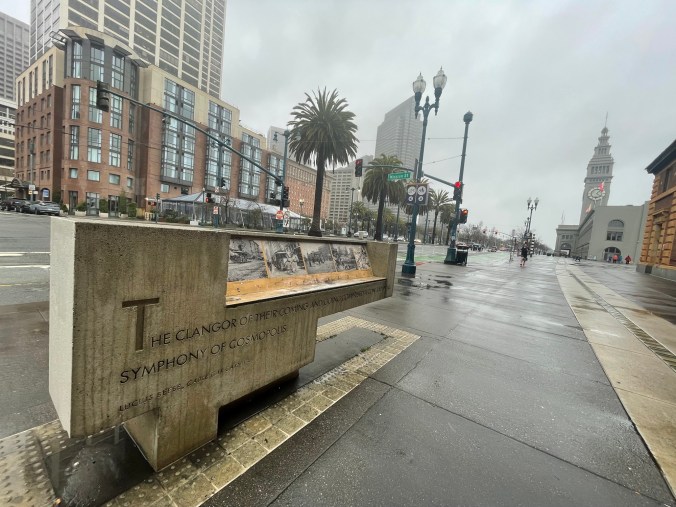
The airport tram runs to a Bay Area Rapid Transport (BART) station, where I purchased a Clipper card from a kiosk. I was headed to the Embarcadero on the advice of my sister, partially because I had been there before and knew the lay of the land. Kimble writes about the Embarcadero in City Limits, as an example of what a city can accomplish when citizens unite against a proposed highway which, in San Francisco’s case, would have run along that eastern waterfront.


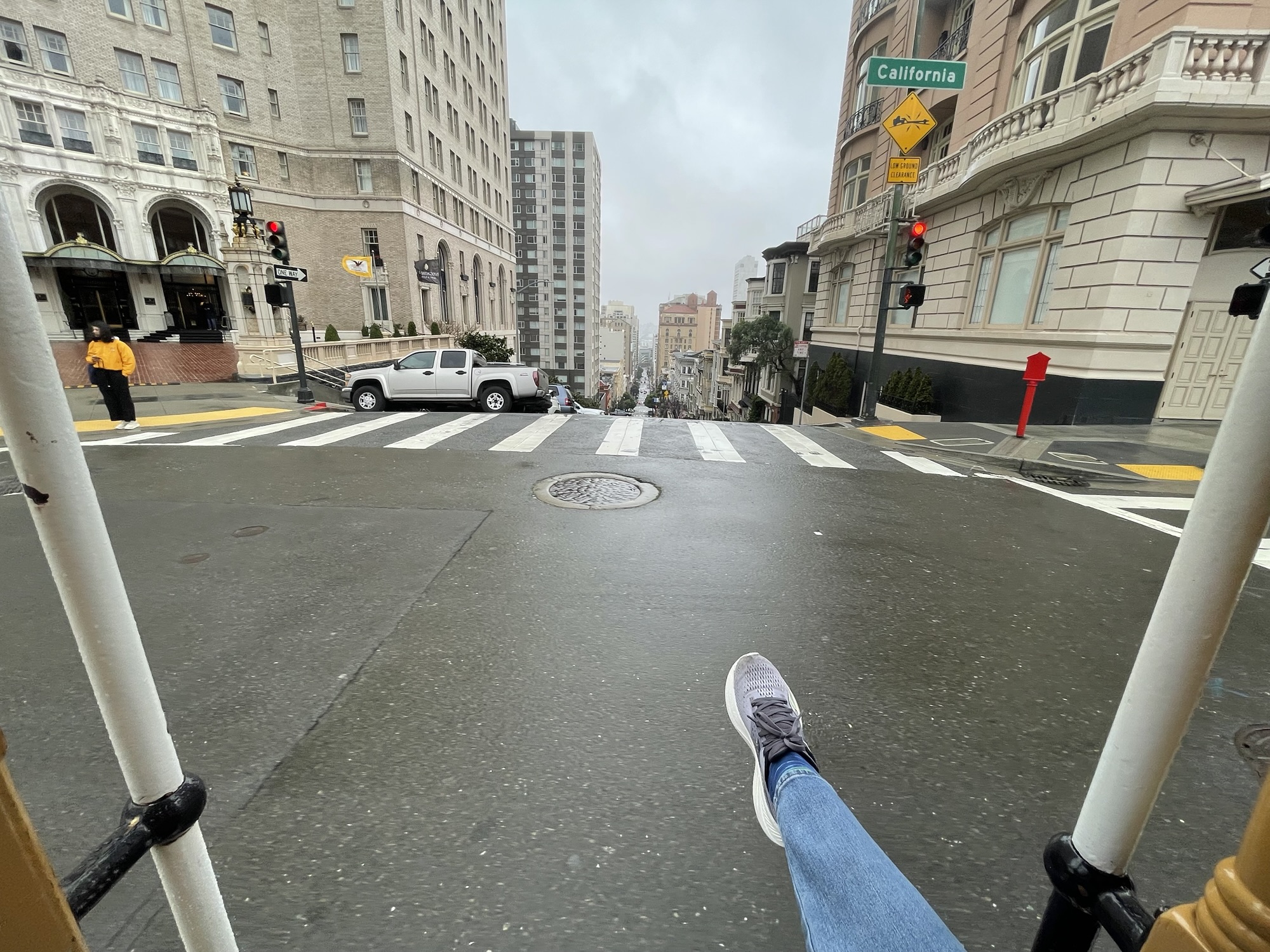
Instead, they have streetcars running past the ferry building, and the pull was too great, so I finished my empanada and missed my ferry. A friend had texted I should go see the Jimmy Hendrix mural on his former residence in the Haight, but I wandered over to the cable car stop and met with one of the city’s Welcome Ambassadors. I wrote him a positive review, which was responded to later by another Mandy, and rode up to the Mission district, then changed cars, changed again when I got on the wrong one and got in trouble for trying to jump off a moving cable car, and ended up in Ghiradelli Square…which is funny because the chocolates are square. I did the touristy thing, then caught the vintage Kansas City streetcar, which doubles as a guided tour, back to the ferry building…where I missed another ferry by eight minutes.




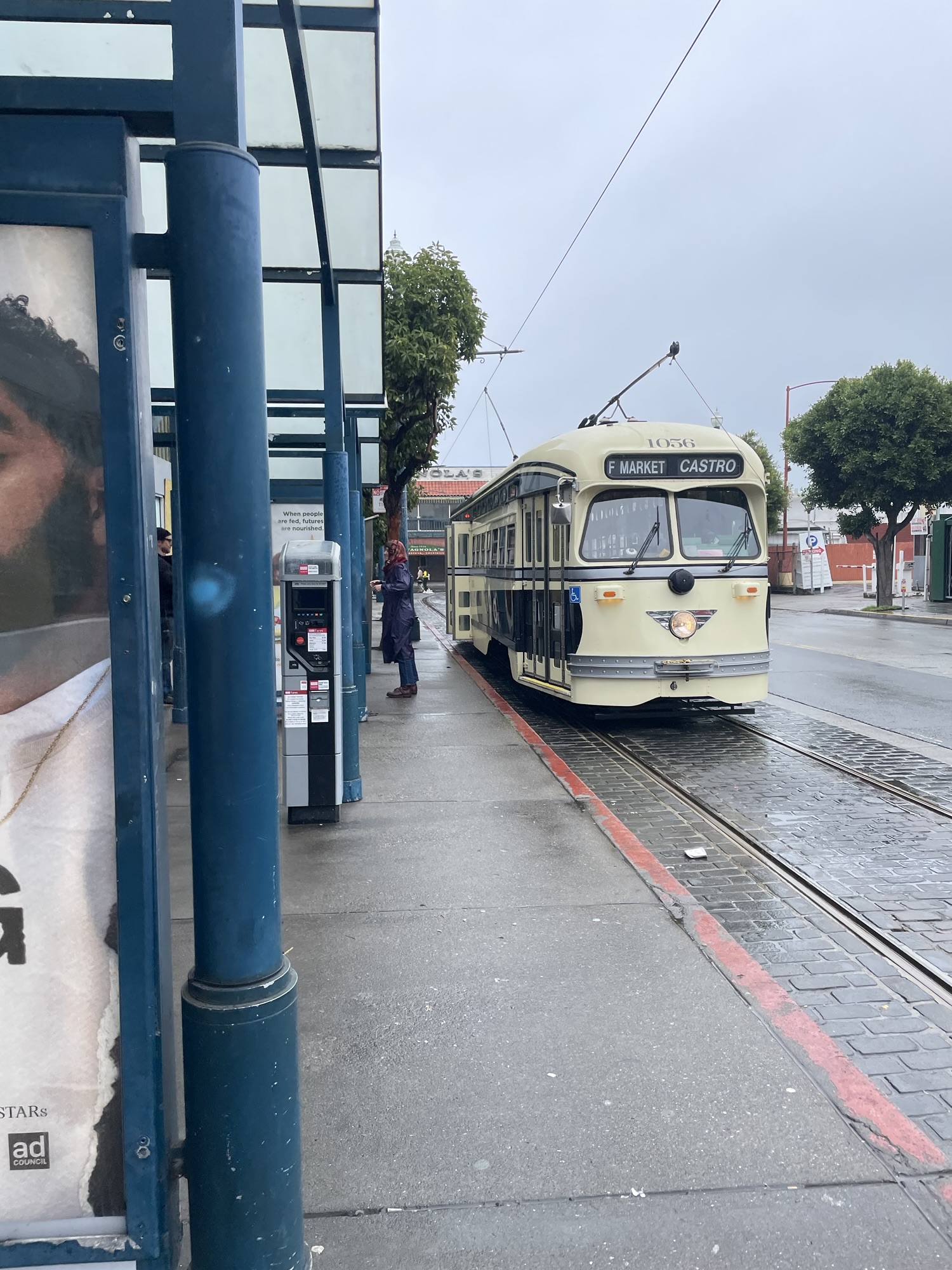


At this point, I was cold and tired and bored, plus my phone needed charging and my backpack was getting heavy. To recount: a Lyft, a plane, a tram, a subway, a cable car, a streetcar, plus a lot of mileage on foot, carrying my belongings on my back. And now waiting for the ferry, which was operating on its weekend schedule, I realized too late. I was not alone, and a woman commiserated with me even as I helped another find her correct gate.
Finally aboard the ferry, I determined that my Clipper card would indeed work on the Sonoma–Marin Area Rail Transit (SMART) train. Halfway across the bay, the rain that had been toying with me all day finally let loose, and I walked the half mile to the SMART station, along a pedestrian/bike path constructed above a busy road, in a torrential downpour. Larkspur Landing looked lovely and cozy, with its little cinema next to the train station, as I huddled under the awning until the doors opened…thankfully, I had caught the weekend’s penultimate train to Petaluma.

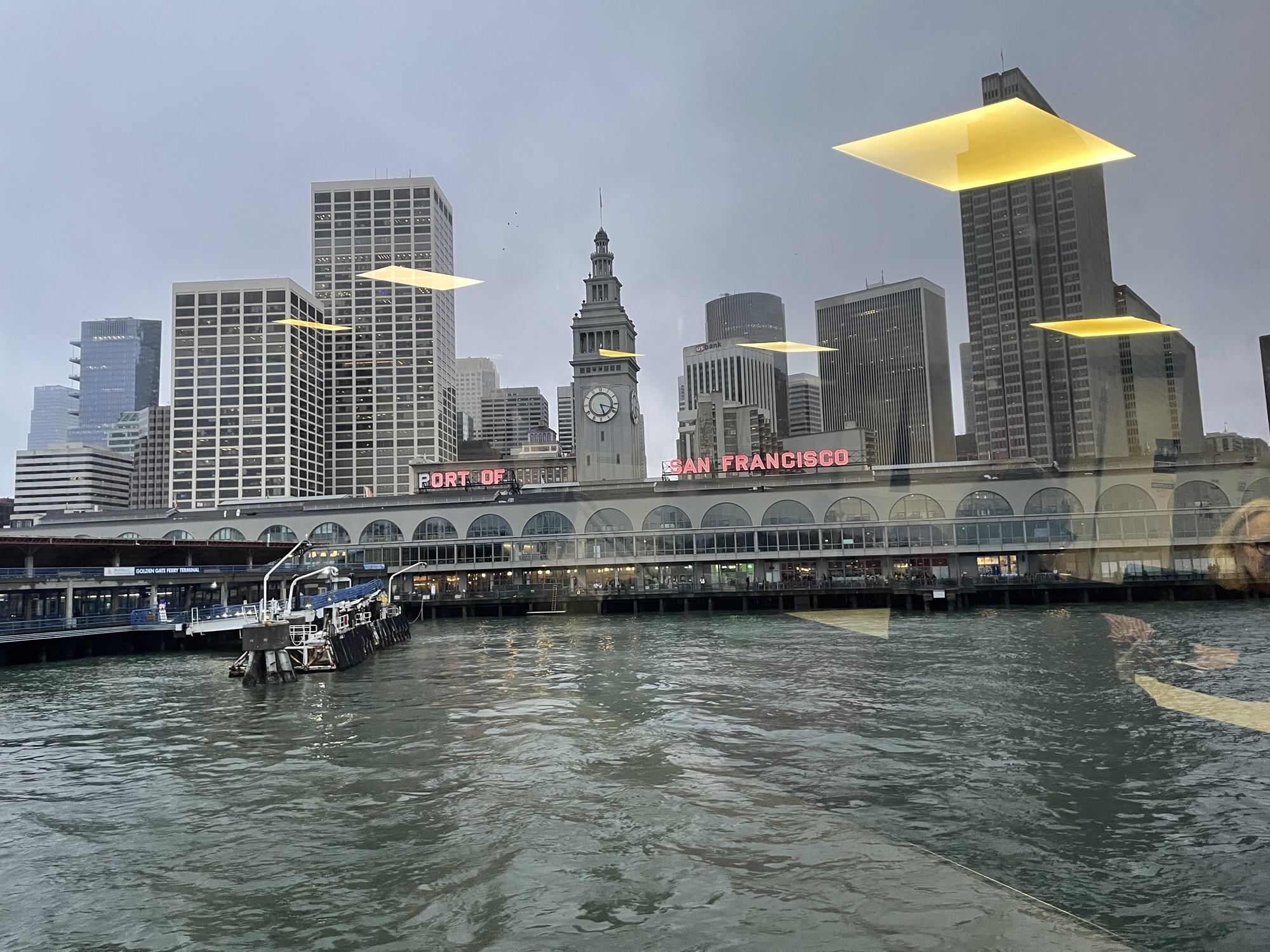


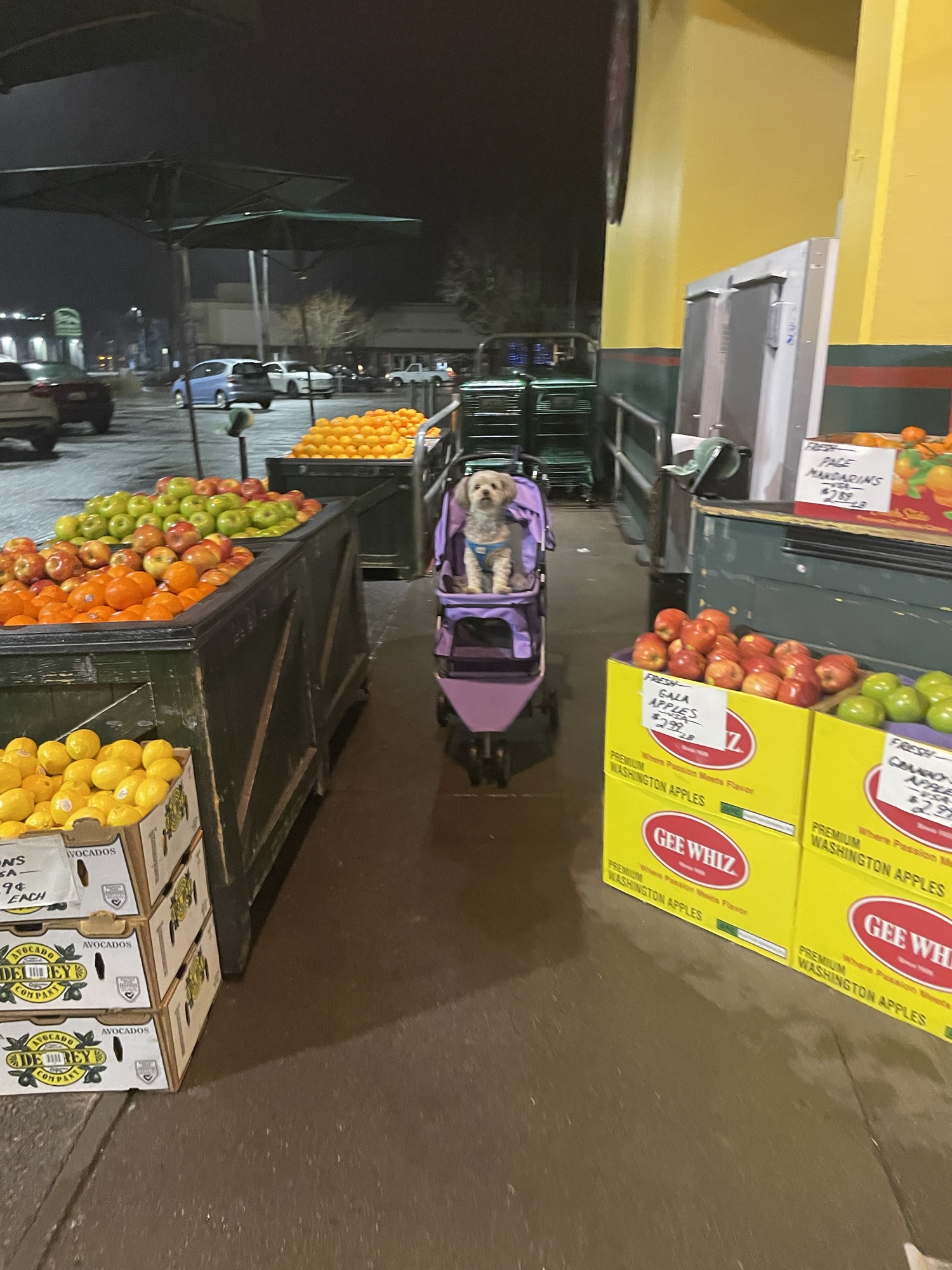
I dried out on the train, about an hour’s ride up the 101, and disembarked in downtown Petaluma. I was still a forty-minute walk from my destination, across the 101, so I turned instead toward downtown and picked out my dinner from Petaluma Market. The friend I was supposed to be meeting had pulled over in the rain and stopped for the night, so I called a Lyft to drive me to my hotel, where I ate my salad in the bathtub.


The next day, after a hike in a sacred spot for me, also in the rain, my friend picked me up in the car that was to become mine, at least for a while. We went for a hike in Muir Woods National Monument and, the next morning, returned to SFO to drop her off. I drove away from the airport in a vehicle of my own for the first time in over two years.
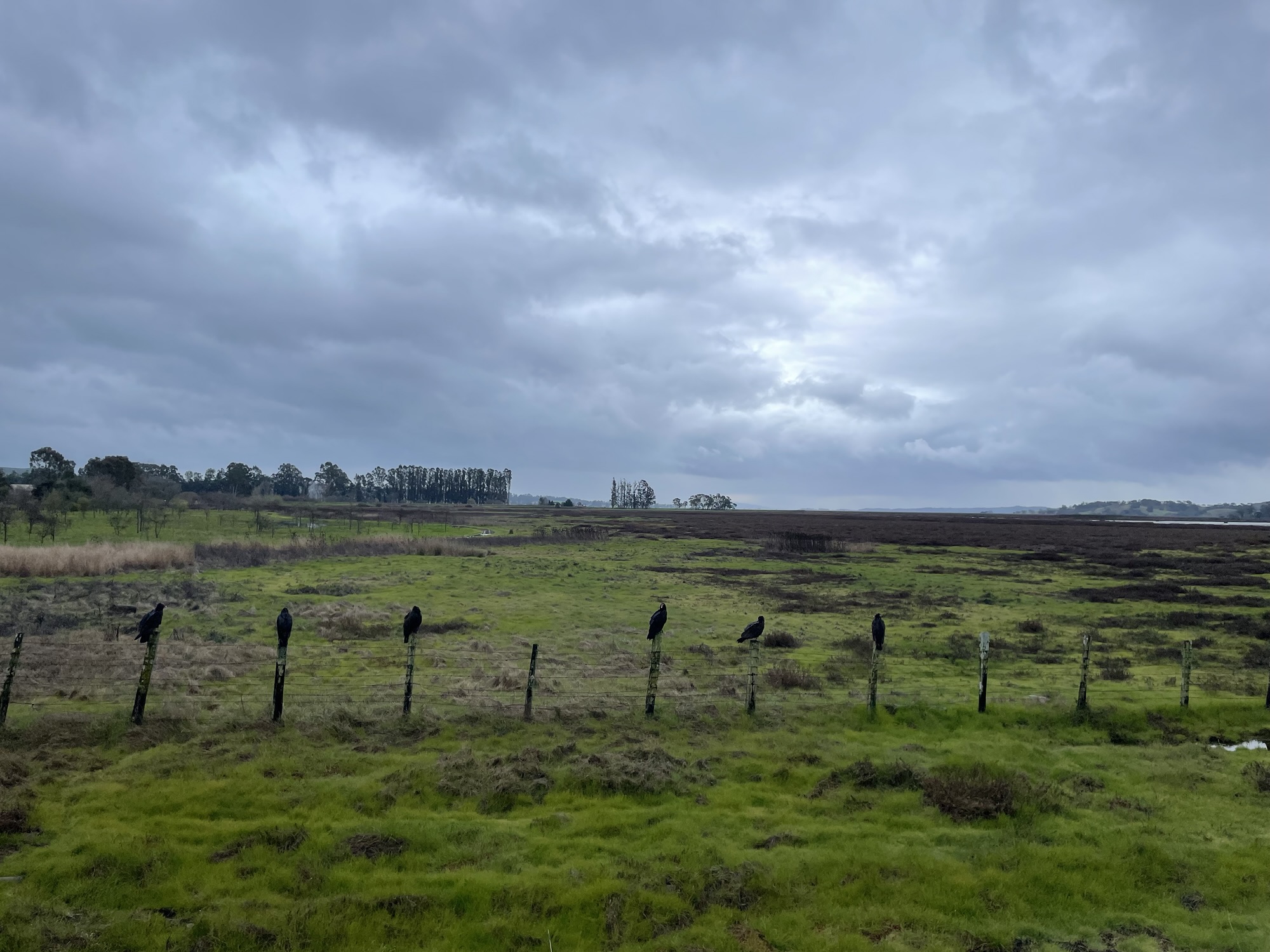
So, to recap, on my last day of public transport dependency, I navigated Austin to the Bay Area via Lyft, plane, tram, subway, cable car, streetcar, ferry, train, another Lyft, my own two feet, and finally a personal vehicle. I then roadtripped back to Austin, but that’s another story. Here are some other miscellaneous modes of transport that I admired along my Bay Area route.


And You’ve Got to Keep Your Own Orbit Going

I’ve been working my way through White Lotus before the new season drops, and I’ve been dragging my feet on starting season two because I know I’ll binge the whole thing but, also, I wasn’t all that wild about season one. It was more about catching up on what everybody was talking about, though I absolutely love the premise: let’s create an anthology series that moves around luxury resorts in stunning locales as an excuse to talk about class issues. Kai’s story was just so gut-wrenching, and not necessarily in an edifying way, but my favorite storyline was the absolute dork of a teenage boy (the crazy emperor twin from GladIIator) slowly falling in love with the ocean, as unrealistic as that resolution was (as was the quick and sloppy law and order that surrounds every crime that takes place, but I guess if you want a justice procedural, you know exactly where to find one that’s been on the air for two decades and launched countless spinoffs).
This overlaps with some personal heartbreak of mine, and this is my attempt to feel my feelings. I saw something during a doomscroll that said you ruminate when you are not letting yourself feel something–you’re trying to intellectualize pain, or sadness, or heartache, or rage, or whatever. So the rumination on this particular White Lotus storyline is partly because it’s a fictional depiction–one of the few I’ve ever seen on this topic–that perfectly illustrates something I thought only I felt.
As an aside, I have to add that one of the people who told me about this show was the resident floozy (her words) on the one and only foreign yoga retreat I have ever attended. She and I happened to be on the same flight out of Houston, a fact we discovered in the pre-trip WhatsApp group. She was late to the airport, but we sat together–I held her a seat while she held up the plane, and I should’ve known then, but I was in my namaste open-to-the-universe phase of healing…a time ripe for picking by hustlers and manipulators. I can see why women my age GOING THROUGH IT get sucked into cults. Anyway, she talked about White Lotus on the plane, since we were heading to a tropical resort, but I had no idea that I was sitting next to our very own Jennifer Coolidge. The Tanya McQuoid of that week in paradise was twenty years younger and without the family money, but she was every bit as lacking in self-awareness and wrongly convinced of her own business acumen. (Again, I have only seen Season One, but I know what happens at the end of Season Two because the internet cannot keep a secret for long–including me. I’m about to lightly spoil Season One if you haven’t seen it.)
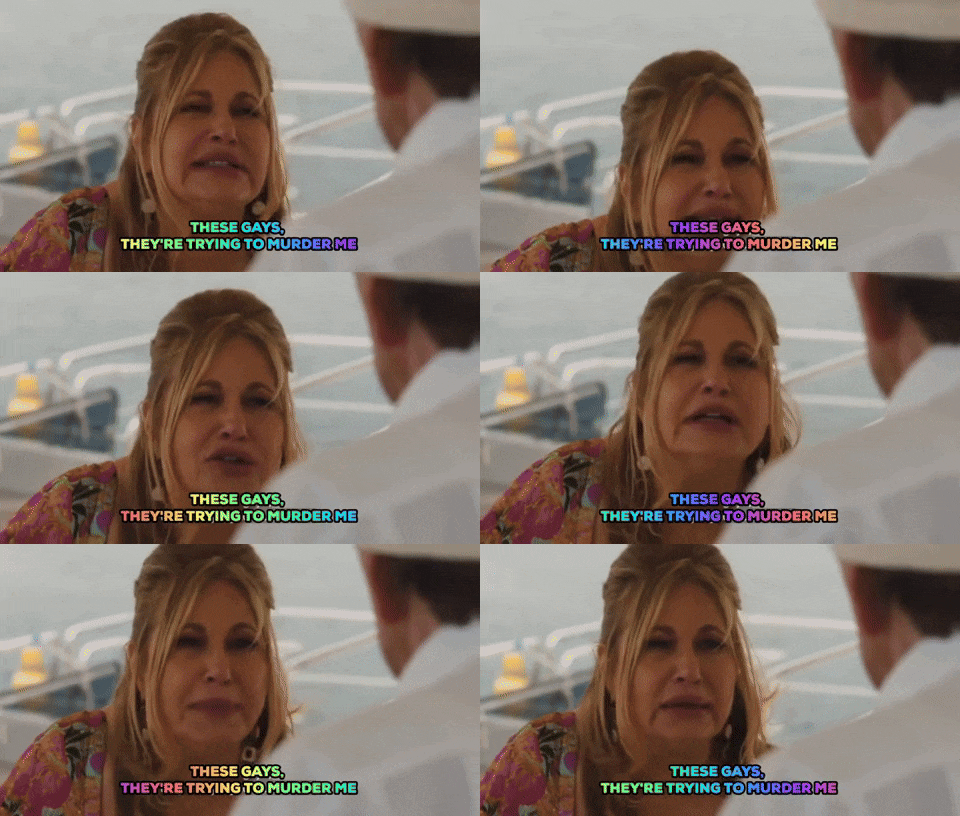
Anyway, there’s a very long rambling tangent (one might say rumination?) on my introduction to White Lotus. Without any further ado, here’s the character that scared the shit out of me in Season One.

Rachel’s backstory is that she has married a man who covets her but does not understand her. He may love her, as much as he is capable of love, but she knows she is trading what she wants (a career in journalism) in a “Faustian bargain” for money and security. Needless to say, this happens a lot. So often, in fact, that I would argue we’ve grown numb to this storyline, so I think what caught me off guard about Rachel is the fresh take the show brings to that fear, and I do wonder, without googling, how much of Mike White’s own professional career has fed into Rachel’s story.
There are two-to-three major knots in this story thread that I want to tease out. First, Rachel has in the past written a profile on another guest at the White Lotus (Mrs. Coach T, playing a type of Sheryl Sandberg character here). Rachel has somehow profiled the woman without ever meeting let alone interviewing her. She admits, twice, that she basically repurposed something that ran in another publication, which Mrs. Coach T. rightly calls “just bad journalism.” I know I’m not currently earning a living in New York media, but I’m not sure that a Business Week-esque magazine would run a refurbished profile based on someone else’s reporting, but I could be very naive here. Rachel does say she writes a lot of clickbait, so it’s possible it was an online-only piece. Regardless, the magazine has enough legitimacy for Mrs. Coach T. to have read the profile…which she hated.
[Insert screenshot of Mrs. Coach T. saying “That was…a…hatchet job” with such aplomb I’m still hearing it.]
This ties in with the other knots in this thread, because that’s how knots work. Rachel has been offered another profile that honestly sounds like a lot of fun (van orgy at Burning Man) but her husband doesn’t want her working on their honeymoon. He, meanwhile, has spent their honeymoon “throwing the world’s biggest tantrum” and “tormenting that poor man” (Rachel’s words), capped off with a visit from his mother, so basically he’s been doing the rich person version of “work” the entire time. But when she wants to accept an assignment, to keep the network connected and wheels greased on her career, he says no. It is under this premise that she approaches Mrs. Coach T, to get advice, one career girl to another. She then gets eviscerated as only a writer can: It wasn’t your story to tell (twice removed) and, furthermore, you butchered it.
Pausing here to think of times in my career when that has happened, and often (but not always) it was the heavy hand of a bad editor. I cannot stress enough the importance of a good editor. Maybe this is what Rachel is alluding to when she talks about her industry connections, because there is no mention of a bad editor when Mrs. Coach T quotes “She rode the Me Too wave,” the line she take offense to in Rachel’s piece because it implies she stood on the empty and broken husks of other women’s careers to reach the pinnacle of hers.

All that leads to this third knot, the scene that shook me: Rachel trying to explain to her husband that she is afraid she doesn’t have any talent. He’s not listening to her, which is telling, because the words coming out her mouth are some of the scariest words a person can say. I don’t know if it’s just women, or if it’s the circumstances surrounding Rachel’s doubt, but this slippery slope right here is where many, many people crash and burn. It’s a steep fucking slope, and the slickness is not the fun kind. It’s black-ice terrifying. And having a partner who fails to recognize that can rip the soul right out of you before you even realize you’re in danger.
Yeah, I’m mixing metaphors here. I’m ruminating over Rachel’s storyline because I’ve rarely seen that kind of vulnerability about the creative life expressed on screen. Mostly because no one gives a shit–I’m deflecting here, but I genuinely don’t think anyone cares about this part of Rachel’s storyline, not when there was so much else going on at the White Lotus. It’s that moment, when Mrs. Coach T asks “Did you sign a pre-nup?” that sets it up, and Mrs. Coach T knows what that means: he says he’ll take care of you, but if you get off this treadmill, you will never gain this momentum again.


So Rachel’s story, and this is so obnoxious that Belinda literally gets up and walks away (a separate “Magical Negro” issue that I have no business commenting on here, but for the Louise from St. Louis of it: someone argued the other day that Louise is a figment of Carrie’s imagination brought on by the trauma of being left at the altar, and I can’t get over that–none of Carrie’s friends ever interact with her!) Anyway, Rachel’s “problems” look like rich people problems because they’re invisible: you can’t get assignments without the clips, and you can’t get clips without the assignments, so you have to be reliable and available. This is a boundary-setting issue I am only just now figuring out, but there’s a reason publishing is populated by rich kids…no one else has the safety net required to navigate this industry.
But the fear that you aren’t talented enough to see it through–I’m trying to hold space for this one, and the lack of a supportive partner, not necessarily because he’s mean, but because he just doesn’t get it–it’s so isolating and lonely. I’m scared to write about this because it sounds like I’m writing about one man in particular, the Shane/Pete character on his honeymoon at the White Lotus, but I’m not. I have come to realize that this is a theme in my life, a consistent problem in my romantic partnerships, and this White Lotus storyline hit so hard because I never talk about it. But I once had a conversation with a situationship where I had to say (text) the words: “I don’t think you can support my creative life.”
I didn’t even have the courage to say it in person; I had to send a text. Because it was my truth, and it was real, but I have never been brave enough to fight for that part of my life. Even afterward, I didn’t feel strong or brave or empowered; I felt so stupid saying those words that I still haven’t gotten over the cringe. The only thing I can cling to, the only rationalization I can muster, is that I had to go through that awkward moment so it would be easier next time. So I never compromise on that slippery slope again.
In the most haunting aspect of Rachel’s story, she finally gets up the nerve to admit she’s made a mistake. It’s incredibly brave, and hard, and scary, and so complicated that it leads to the big death of season one. When it’s all said and done, we see her husband waiting at the airport. This is where we met him in the flashforward at the beginning of the season, when a couple asked “If you’re on your honeymoon, where is your wife?” He tells them to fuck off, politely, before staring out the window at the makeshift casket of human remains being loaded on to the plane [my law-and-order question here is, if Thailand was next on their honeymoon, which plane is this and should the body and killer be heading to the same destination, but that is a separate tangent]. We’re meant to suspect, at the beginning of the story, that the unseen wife of the honeymooning couple might be the body being loaded onto the plane, but Rachel’s fate is actually…dum dum dum…much worse.
Because she goes back to him. At the last moment, she arrives at the airport, and the relief on his face contrasts horribly with the apprehension on hers. I understand there’s an element of “til death do us part” here, and Shane/Pete has absolutely been through something perhaps life-changing (probably not, he’s obnoxious and rich), but we fucking know Rachel is lying when she claims: “I’m happy; I’ll be happy.”
So she made her choice, to ski down that slippery slope in the best ski gear money can buy. To give up on her career, which probably wasn’t going anywhere anyway, because Mrs. Coach T said she had no talent, which was probably true, but I guess we’ll never know because she gave up.
Oh! I just remembered another work of fiction where I have seen this done well! The original series finale of Party Down (ergo, spoiler). Lizzy Caplan finds out her one line, her big break, has been cut from the Apatow movie, and she is understandably distraught. Adam Scott (who has abandoned his own once-promising and passion-driven acting career) tries to comfort her in a ham-fisted way, and she tells him: “I know what you’re trying to do; I know that you’re trying to help me. Maybe if we were the same kind of crazy, but we’re not. Because if you’re not crazy enough to believe it for you, how are you going to believe it for me?”


And just like that…I found some compassion for the other half of this dynamic. Because their doubt in you–even if they love you–is rooted in doubt in themselves.
Such Good Sports

I have to write this now because I’m on deadline and procrastinating; this movie keeps rattling around in my head, and maybe writing about John Travolta’s magazine assignment will inspire me to finish my own magazine assignment.
I’m not proud of this, but I only finally got around to watching Perfect because of the Jimmy Fallon spoof that randomly showed up on my feed. I don’t watch the late night shows/don’t have a TV, and I confess I googled the wrong Jimmy when looking for this clip again this morning:
Thoughts on Jamie Lee Curtis and this bizarre sexually charged aerobics scene are best left to other people, but I only first learned of this film’s existence a few months ago when it was included in the Alamo pre-show: I’m fairly certain for Love Lies Bleeding and The Substance, but I could be wrong on one of those. Thoughts about those movies, plus the Apple TV show Physical, are part of a bigger project I have in mind, and right now I just need to write about the writing life…as much as that annoys me. Journalism and aerobics? Sign me up and put me in, coach.
The 1985 movie Perfect is streaming on Amazon, and it joins a pantheon of 80s films I think more people would enjoy if they were more readily available on Netflix (I’m thinking of Youngblood here, but also Skate Town USA, which is still eluding me by only being available at Austin Public Library on Blu Ray, and my dinosaur of a laptop can only play DVDs). These movies aren’t really that hard to find, it’s just a matter of convenience. And time.
Here, John Travolta plays Adam Lawrence, a fictionalized version of Aaron Latham, the Rolling Stone journalist who wrote the articles the movie is based on as well as the screenplay for said movie. There’s a lot of meta activity there, with a tangent into Blue Crush and Susan Orlean that will also have to wait for another day, because it gets more meta: Jann Wenner, the founder of Rolling Stone, plays a fictionalized version of himself named Mark. There is so much to unpack there that I’m just going to leave the entire suitcase overstuffed and intact so I can keep rolling on those little suitcase wheels.

While pursuing “real journalism,” Travolta sees two attractive singles interact at a gym; this sparks a story pitch about health clubs as the singles bars of the 80s, which Jann agrees to let him write while he’s in LA to cover legal proceedings for the real story he is pursuing. Dude’s per diem is phat, as is his NYC apartment, and I yearn for the days when writers lived like that. however fantastical (hello, Ms. Bradshaw).
I have so many thoughts about the health club aspect, which I’ll probably save for another post/that bigger project as I get around to it, but since I’m struggling to write my own magazine article today, I want to focus on two things that happen in the course of Travolta’s research: 1) One of the gym trainers tells him he doesn’t want Linda as a source because “she’s the most used piece of equipment in the gym,” and 2) Linda herself tells Travolta that looking for Mr. Goodbody is a lot healthier than looking for Mr. Goodbar, as in it’s better to go to a gym to meet people than to hang out in a bar. Ha ha.


He flat out tells Linda he’s going to use the Goodbody line, which becomes the headline, and the “most used piece of equipment” nickname becomes the concluding hook about the gang bang he witnesses. Yep. Gang bang–Linda’s own words for an entirely consensual experience in a parked van that she apparently invites a Rolling Stone reporter, who has identified himself as such to all involved, to witness. I will also add that, based on context clues and foreshadowing, the [off-screen] gang bang includes the trainer who gave Travolta the “equipment” line by slut-shaming Linda in the first place. Hypocritical? Or just boys being boys? BTW, happy inauguration day to all who celebrate.

Bad writing and bad behavior aside, what I’m hung up on here, today, as I struggle to write my own piece, is how Travolta’s character lets other people’s words write the story for him. The headline and the punchline are both words quoted/borrowed/stolen from other people, and I couldn’t help but wonder… ; )
Where is the line between interviewing and plagiarizing?


Here, in the story that Adam initially writes and had every intention of submitting (and for which someone, probably Aaron Latham, actually wrote the text we and Jamie Lee Curtis can see on Adam’s computer screen), he has gone in with his mind made up about the narrative and just found the evidence and quotes he needed to support that hypoTHESIS in the words and actions of the people he’s covering.


Without getting into spoilers, Jamie Lee Curtis’s character has some experience with this journalistic tendency, and she tells off Adam in a way that I’m still thinking about (and, in the movie, has such a profound effect on him that he perseveres with the other story, the real story he was a covering, in a pigheadedly ethical way that I found deeply satisfying). Her words “It’s not the truth I’m worried about, it’s the tone” keep reverberating as I try to write this admittedly less high-stakes article in a way that honors other people’s words without 1) using their own words against them and 2) allowing their words to drive the story for me.
So here are some more out-of-context screenshots since my Amazon rental already ended. I guess I’ll get to work.


All the Boys Love Mandy Lane
Ok, last one for today–like I said, I am making myself write, but for the life of me, I can’t remember what I had planned for this one.
I finally watched 2006’s Bastrop-filmed, Robert Earl Keen-cameoed All the Boys Love Mandy Lane. There’s all sorts of self-reflection here: it’s Texan, my name is Mandy, but there’s also the topical Amber Heard hatred.
Oh, now I remember: it’s about how easily we slander pretty women, which is tangential to the point of the movie…
This is all coming about because of the Blake Lively smear campaign, which was orchestrated by the same people Johnny Depp hired to takedown Amber Heard. This is such a weird new world of celebrity, all about image tarnishing and reputation management, and I can barely handle my own digital footprint. In a way, it’s cool I could hire someone to do that; in another way, it is absolutely terrifying.
What I keep coming back to is this:

This is two women talking about taking down another woman. I can’t stop thinking about it.
As much as I want to roll my eyes at this, and I very nearly dismissed all of it, I keep coming back to that line texted between two women talking about a third: People really want to hate on women.
The Mandy Lane movie is tedious to watch because of the way it handles Amber Heard’s beauty (and there is absolutely no denying her beauty: remember her at the beginning of Zombieland in 2009? Her 2011 turn as Chenault in The Rum Diary, where she was so stunningly gorgeous Johnny Depp left his French model wife?) This movie was made before all that, when she was a 20-year-old Austin native running around a *ranch in Bastrop allegedly 150 miles from the nearest gas station* as the quintessential–one might say apex–final girl.
In the movie, she resembles a cross between Bella Swann and Betty from the Riverdale series (indeed, Mike from the Twilight movies is one of the better presences in this horror movie). She is constantly pawing at her locks a la Kristen Stewart with her hairpiece, even in some really pivotal life-or-death scenes, and though she’s supposed to be a runner (the final girl has to be in shape enough to run!) her form is gawky at best.
Throughout the movie, the characters’ motivations are so flimsy that the final twists don’t shock because it’s been so hard to tell which character is deceitful and which is just played by a bad actor. The premise, though, is that all the boys are indeed in love with Mandy Lane, and that genuinely motivates every single action they take. It makes zero sense.
It’s hard to talk about Mandy Lane without giving away the end of Mandy Lane, but the idea is that it is supposed to be some sort of commentary about their focus on her, in hindsight. But to get there, you either have to see the twist coming (I did not) or endure this weird behavior the whole movie in order to get to the twist, which honestly does not hold up even when you look back at everyone’s actions through that lens.
I’m going to confess, I thought I knew the twist, and it involved everyone pretending to be so in love with Mandy to be faking it for very detailed conspiracy reasons (maybe that says more about me than the plot, but I’m convinced I read this in a review or spoiler somewhere). That would have made more sense. The people who died had more motivation to kill than the people who actually did the killing. And I think maybe that was the commentary. That beautiful women make us do stupid things.
So back to Blake Lively, and Johnny Depp running off with the co-star young enough to be his daughter, and this book on my nightstand about Helen of Troy, and the women who work as hired guns to take down other women. Yes, it is silly that Blake Lively’s haircare line flopped. In some contexts, it is really funny, as is the fact that Nicepool’s man bun is now part of a case presented in a court of law.

And we are forgetting the context of the movie that started all this. Mandy Lane is a slasher where dumb, good-looking kids (young Luke Grimes is in this one) are meant to get hurt, but It Ends with Us tackled domestic abuse in a way that resonated with a lot of people. I got annoyed because, in the end, the lesson was simply that Blake Lively’s Lily Bloom did not deserve to be abused because she was so beautiful and kind and good. Seriously. That’s what her knight in shimmering armor tells her (accidental Johnny Depp reference I’m rolling with): he says she saved him by looking out her window; he saw her pretty face and decided not to die. Her face saved him, like Helen’s launched a thousand ships. I got the impression, sitting in the theater, that those of us who don’t look like Blake Lively will probably need to fend for ourselves; furthermore, the implication that, if we aren’t perfect little sweet and kind angels, paragons of motherly virtue and patron saints of flowers, maybe we deserve what we get…that stung. It always does. So I almost jumped on the bandwagon when an actress’s public image took a hit, because it was gleeful and fun to do so.

Ultimately, though, I side with the creators, and in this case that means Colleen Hoover. I have never read a single Colleen Hoover book, but I’m not going to deride anyone who reaches that many people. If she wrote the book on men mistreating women and she sides with Blake Lively, flower puns and all, that’s enough to give me pause. It’s the other women’s words, the women destroying another woman for sport (and, yes, pay) that convinced me this is more than just a case of silly celebrities spatting over who gets more attention at the movie premiere.
Wholesome Entertainment
I finally got to watch the Dude Perfect 30 for 30 over Christmas break, so now those guys are on my radar. I keep thinking about the similarities between Dude Perfect, the Savannah Bananas, and The Daytripper on PBS. This is not fully fleshed out, but I’m just trying to make myself write, so here are some half-formed thoughts I’ll revisit later…
They have to do it themselves. That seems to be what unites them all in my mind. One of the talking head journalists in the 30 for 30 doc said something about Dude Perfect taking their own relationship with sports and running with it. I’ll look up the full quote later, but I think that’s the idea behind both Dude Perfect and the Savannah Bananas.
I feel like, if you made a Venn diagram of Savannah Bananas and The Daytripper, you would get Dude Perfect in between. There are probably countless other examples, but these are the three I’m working with. Good clean family fun, wholesome and devoutly Christian, almost entirely populated by white guys. But there’s also something of an entrepreneurial spirit that says “We’ll just create our own game.” I’ve heard The Daytripper tell multiple people in and around Georgetown, those asking how he gets to do what he does, that he just found sponsors. You just have to find a way to finance the thing you want to do.
There is also an element of dads or dads-in-training just wanting to entertain their kids in healthy ways, and making your kids laugh is one of the best skills a man, woman, or non-binary parent can have. This is probably really important to their success, but since I don’t have kids, I’m not going to linger here…
Back to overhearing someone ask The Daytripper how he got to do what he does, plus looking at the Dude Perfect college-guys origin story and remembering how every single dude I knew in college played idiotic games just like that, there is absolutely an element of “anyone could do that.” Anyone could film trick shots and post them on YouTube. Anyone could take a faux-journalistic approach to family vacations. Anyone could reinvent the game of baseball into a sideshow with random rules no one bothers to follow. Anyone could do it. But they didn’t.
I’m thinking of what, for me, was the most poignant scene in A Complete Unknown. Bob Dylan, king-of-the-world-newly-famous Bob Dylan, has just been in a scuffle with alleged “fans” who recognized him on a night out when he thought he was just enjoying the (Irish!) music at a session. He says to Sylvie/Suze, and I’m paraphrasing again here because I can’t research this one right now: They ask me where the songs come from, but what they really mean is, why don’t the songs come to me?
It’s the aspect of envy that, when someone is so expert at something they make it look natural and effortless, we all assume we should be able to do that thing just as easily and just as well. Why aren’t we famous? Why aren’t we getting paid for it? I’m guilty of doing this (in the distant past!) with dance: dancing is something that should come naturally to us, so when we see professional dancers, part of us thinks: I should be able to move like that, no problem. I took dance as a kid. I was on a cheerleading team that performed at pep rallies. I can move. But you can’t, not really, not anymore, not like that.
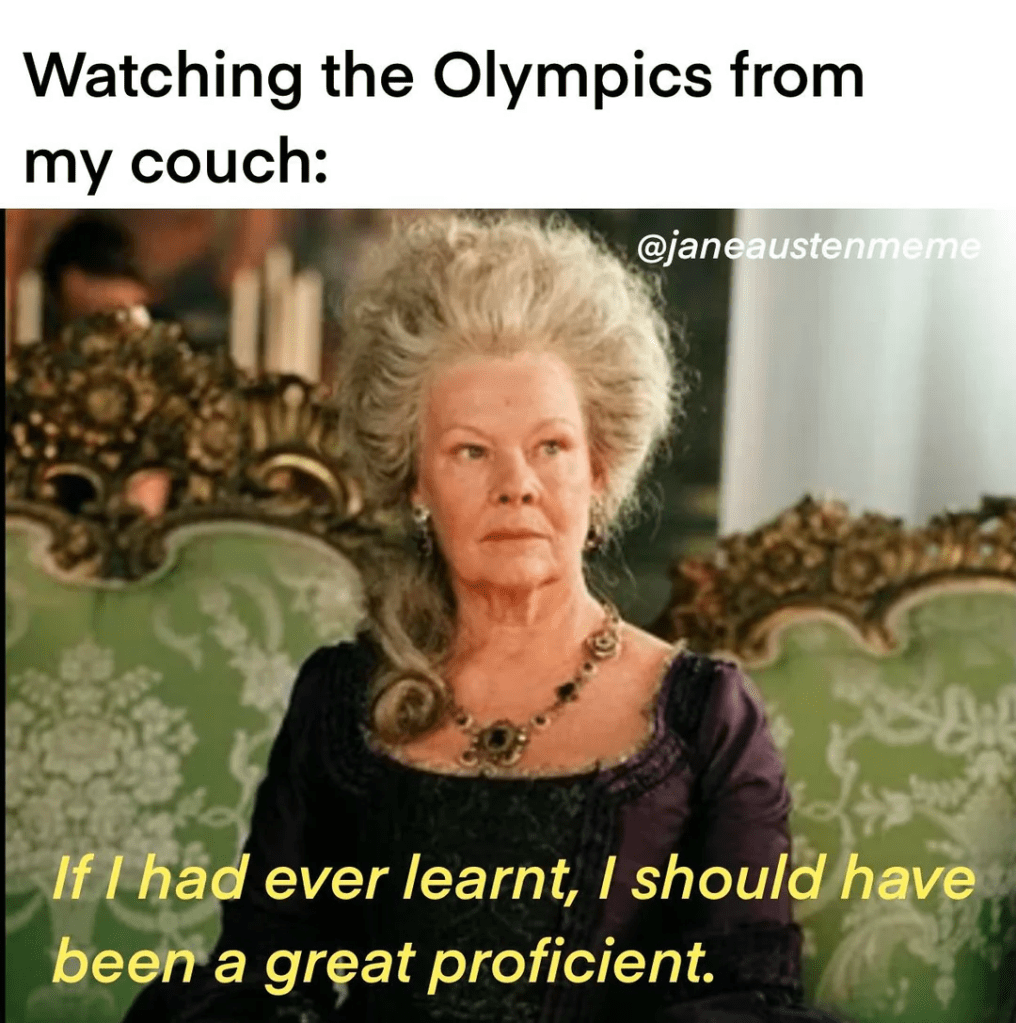
I would argue every single armchair quarterback has this mentality.
With Bob Dylan, the dude was steeped in music. He lived and breathed music, all kinds–it just happened to be folk that propelled him. He could sit down and write a mumbling, rambling song, full of seemingly off-the-cuff slant rhymes, because he has an encyclopedic knowledge of everything that came before. He found his place within the flow of music that has been co-created right alongside our DNA. (I would argue that this is what the biggest female pop star on the planet is doing now, that she is the Bob Dylan of the social media age, but I don’t want to go down that rabbit hole).
So when I watch the Dude Perfect dudes show off their new headquarters (soon to be complemented by a branded store, just like The Daytripper, full of DP merch, just like the Bananas), I actually don’t get jealous because all I can think is, “Dude, they really love sports.” Like, I can’t imagine loving sports that much. So I don’t feel my ego threatened by any of that, but I can empathize with someone who does.
And bringing it all back home…I’m reading the Dude Perfect book right now, because that’s how I function. I get the appeal; I’m just trying to understand how to make it work for me…without being a jealous dick who punches Bob Dylan in a pub. Suffice to say, this happens a lot with writing and publishing. Lots and lots of people have passion, and sometimes it finds its outlet in punches or posted comments. Sometimes, when we listen to our higher angels and some really savvy money guys and social media mavens, we can find a way to make it work for us, to make it pay.
Like I said, I’m still working through this one… 😉

In Defense of Merle Kittridge
I just rewatched Bell, Book and Candle because I’m back on my witch shit, but also it’s a Christmas movie after all, and this viewing had the brunette fiancee stereotype nailed. There’s been a trend in recent years to flip the tropes of Hallmark movies and unimaginative rom-coms: watch the movie in reverse, and the woman escapes her small town to become a high-powered big-city career girl; if you are brunette and focused on your career, you will absolutely lose your boyfriend/fiancee/husband(?) to the blonde protagonist; be careful not to visit your small hometown over Christmas, or the Christmas tree farmer who never left town will trap you with his rugged good looks and folksy wisdom. Stuff like that.
So I’ve been paying extra mind to the non-other women in these movies, the ones whose perspective makes the protagonist’s behavior look selfish at the least, insane at the most. Carrie Bradshaw is our favorite anti-hero in this regard; the woman cannot stop fucking up. There’s a long, luxurious deep dive I want to do into the psyche of Big’s first wife, Barbara–a children’s publisher whose deceased ex-husband left his second wife a million dollars, his third wife with a lifetime’s worth of “I couldn’t help but wonder…” questions. What did he leave her? How has her career progressed? What was their marriage like? I have so many thoughts, fan fiction levels of ideas, and I do think she is the most interesting side character in the entire Sex and the City universe.
But, as usual, I got distracted talking about Sex and the City. Another perfect avatar of the brunette career-girl fiancee is Parker Posey in You’ve Got Mail, a movie I don’t care to rewatch (I am growing weary of the “we must save this beloved neighborhood bookstore none of us actually spend money in” attitude, but that’s a separate post as well). It doesn’t matter if I do the research because it’s Parker Posey, which is enough, but her character Patricia Eden works in publishing too. Perfect. No notes, mostly because I don’t want to rewatch the movie.
So, back to Merle. We learn of her through letters on Jimmy Stewart’s desk, which Queenie has leafed through, but when we first meet her, she is wearing this exquisite green dress I would argue rivals Kiera Knightley’s Atonement green dress, adjusting for inflation and, you know, 1958 morality standards.
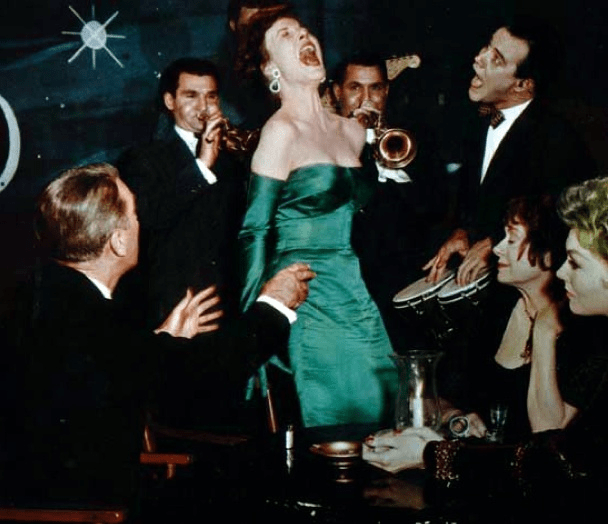
Anyway, before I get too carried away looking at images of green dresses on Pinterest, the point is that Merle herself is actually an interesting character. She went to college with Gillian and was known as something of a “beau-snatcher”; she once wrote an anonymous letter to the dean complaining about a girl attending class barefoot. She is deathly afraid of thunderstorms. She agreed to accompany her fiancee to the Zodiac club, where the musicians torment her until she leaves (granted, she had just insulted one of them, the perfectly gay-coded and bitchy Jack Lemmon). I’m not sure what she does for a living, but she has a nice apartment to herself, though Jimmy Stewart rightly asserts that she needs to redecorate, and she paints in a skilled abstract style that is too confusing for him. After he jilts her on Christmas Day, she refuses to take him back. Yeah, she is kind of unpleasant, but she has a rich inner life. She was simply with the wrong man, and it took a bit of witchcraft to convince them both of that.
2023
Retiring these cowgirl boots from Maurice’s. The vinyl is peeling, and they were never my style anyway (though I do know how to ride a horse). I took them for a final spin around Ulta and Whole Foods, but the J.Crew outlet was closed.
I have some ideas for weekly blog entries; for today, however, this will be enough.
I Just Want Prince to Be Proud of Me
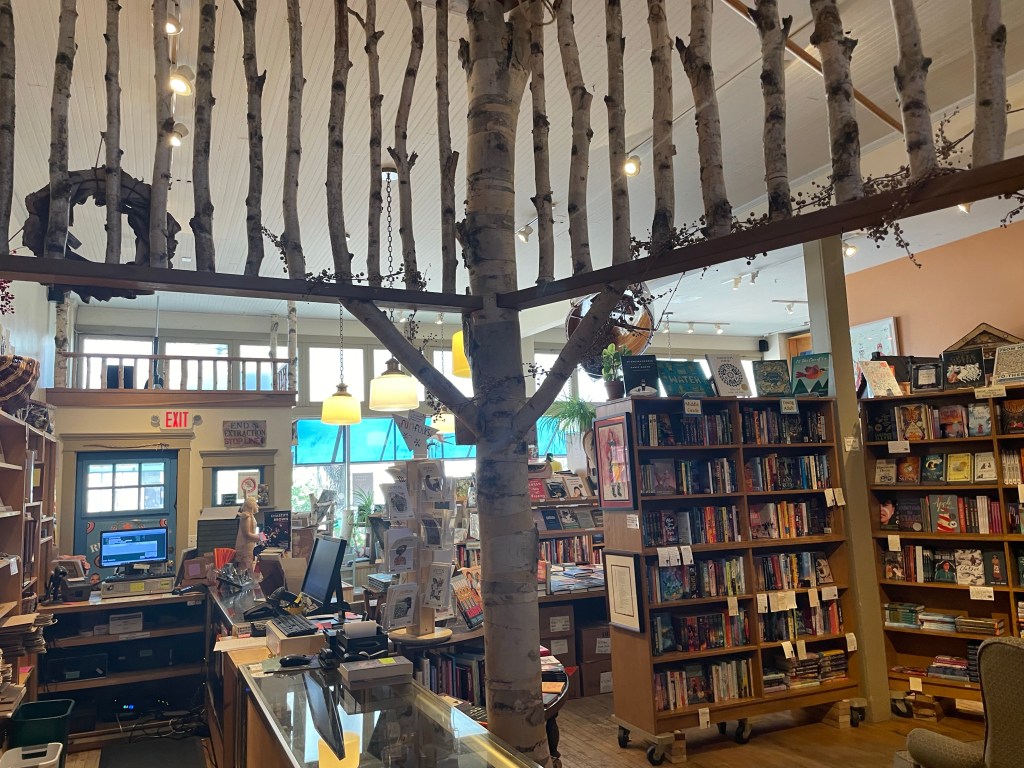
In downtown St. Cloud, I asked the bookstore owner where I could get a decent meal within walking distance, and he directed me to the White Horse, a bar with a full menu two blocks away.
“Are you still serving food?”
“You betcha,” the Minnesotan barman replied. “Sitting outside?”
It was a nice, sunny day for Minnesota, but I am from Texas, and I wanted to thumb through my new bookstore buys, which embarrassingly included Lonely Planet’s guide to becoming a travel writer. I ordered the cubano he recommended over another sandwich he deemed “a bit too spicy,” (again, I’m from Texas, but you betcha) and pointed to a bar table in a dark corner. “I’ll be over here.”
He shrugged. “I’ll chase ya.”
Don’t make me chase you
Even doves have pride
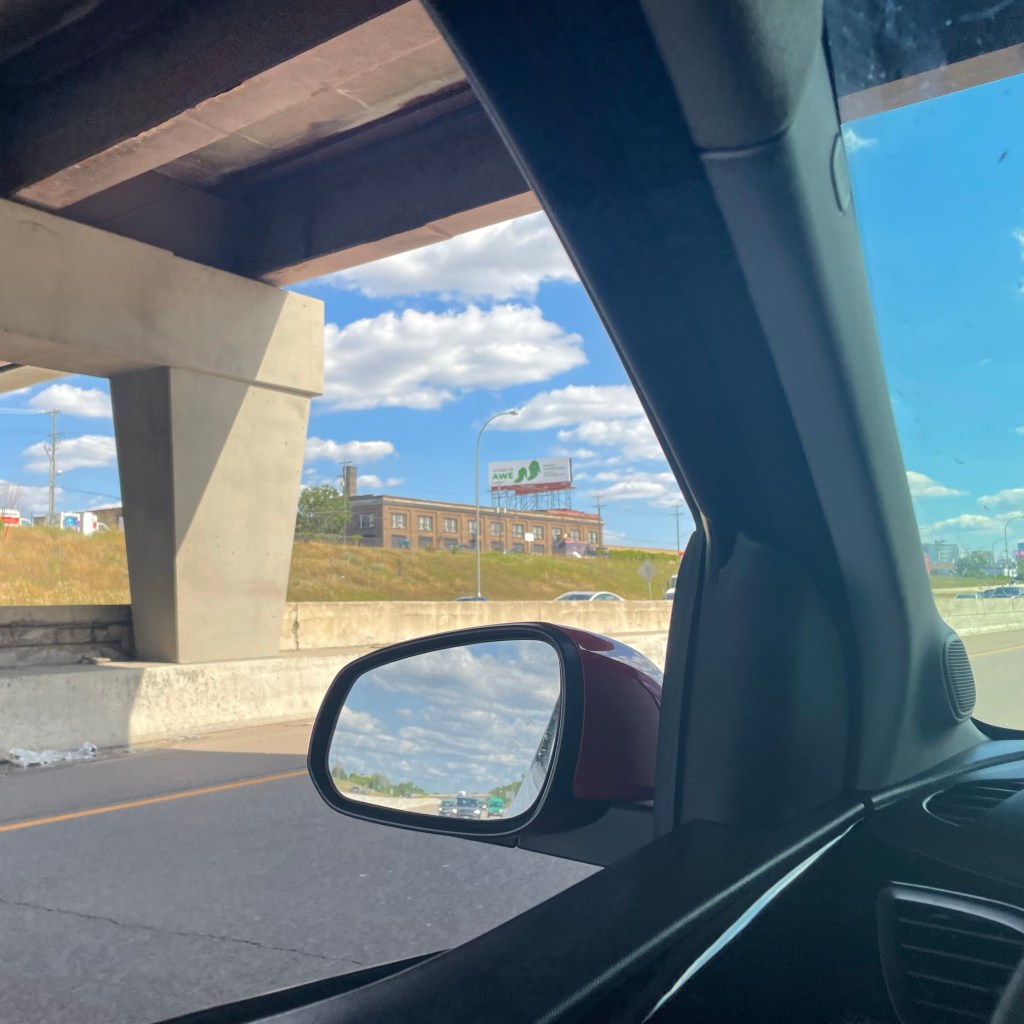
I saw my first billboard for Paisley Park shortly after leaving St. Cloud, an image of the shoe exhibit inviting me to “Stand in awe.” I squealed, snapped a photo, and drove on, stopping once to pee and buy a Purple Thunder Mountain Dew, available exclusively at 7-11. I would see the same billboard again an hour down Interstate 94, backdropped against the Minneapolis skyline. I nearly broke my neck driving past the Spoonbridge sculpture park as I turned off for Birchbark Books & Native Arts, my only stop before Prince Land.


Prince’s Minneapolis, which I know only from Purple Rain, is the setting of the Prince planet in Ready Player Two, the sequel to Ernie Cline’s blockbuster novel and subsequent Spielberg movie. I loved Ready Player One, reading the novel and going to the theatre twice each, so I never understood the grumblings of real geeks (“I’m not going to watch my childhood bastardized on screen,” one nerdboy said) until Ready Player Two. It was here, on an impeccably researched but passionless Prince planet, that Cline revealed to me why his brand of fanboy fiction infuriates true heads. [Spoiler alert:] To beat the Prince planet, a player must…fight Prince.
To reiterate, the final boss of the Prince planet is seven iterations of The Purple One himself, whom players must defeat in combat. This is, for anyone with even a cursory knowledge of Prince, absurd. There is no planet in the multiverse, fictional or otherwise, on which one would have to fight Prince. It is completely plausible that you would have to fuck Prince, but never fight him. A situation where one has to seduce The Purple One in order to ascend from his planet is intriguing, even titillating; a battle royale is simply disrespectful. Prince was a lover, not a fighter.
All seven and we’ll watch them fall
They stand in the way of love and we will smoke them all
I had determined in Omaha that, since I was this close to Minneapolis, it was time for me to visit Paisley Park. I thought I might go on a Sunday, “like church!” I mused; alas, tickets were sold out, so I bought the next available date: Tuesday. And I knew where I needed to stay Monday night.
The Beautiful Ones, Prince’s sumptuous 2019 memoir, was meant to be a very different book, but his death pre-empted a lot of the planned work. Still, it is a gorgeous object, full of photos and handwritten pages of notes printed on heavy German paper. Biographer Dan Piepenbring deftly handled the change in assignment, writing in the prologue (and an excerpted article I first read here, with slight changes) about his hiring and vetting as Prince’s official collaborator: in his proposal, he wrote that Prince’s music made him feel like he was breaking the law, a statement that The Purple One quickly corrected, for funk is about nothing if not structure and rules.
This shift in emphasis toward the process of writing instead of the final polished product Prince had planned is echoed in the archives locked inside Paisly Park, recordings the estate promises to dribble out according to Prince’s very specific and well-documented wishes regarding music ownership. We read about the work of biography, the chosen writer documenting his meeting Prince for the first time. He ruminates on the wait at the Country Inn & Suites in Chanhassen, an unofficial Paisley Park waystation seven minutes away, where Prince would rent a suite for visitors to wait in until he was ready to bring them to Paisley.
Amazingly, I remembered the name of the hotel, along with the claim that Prince could have purchased the hotel four times over with the amount of money he spent there.


I chuckled when I arrived at the Country Inn & Suites, which was actively having its roof replaced. Normally, listening to men with nail guns stomp and clamber all over the roof of my $200+ king suite would be an unwelcome development, one that certainly should have been mentioned on the website or post-reservation email or even printed letter upon arrival, like the one apologizing for the Wichita baseball stadium’s fireworks.
But my dad had owned a roofing company, making similar bids all over the country and inadvertently instilling my love of travel. We once visited him at a jobsite in South Dakota, my first visit to that state and the reason I did not need to make the obligatory swing by Mount Rushmore on this trip—that, and I had also recently seen the image of the original Six Grandfathers mountain face, and what to my childish eyes seemed awe-inspiring now seemed, at best, Looney Toonish. The roofers crawling all over Mount Chanhassen seemed like omens I was in the right place, so I said a little prayer for Dad and went inside.


Bolstered further by the Prince shrine I found near the lobby, I ducked in to poke my head around the fitness center—indoor pool and the requisite cardio machines, but no free weights or scale, which was probably for the best, given my recent diet of poutine and pub grub. Once checked in to the second floor (not a sound from the roof, though ground-level machinery was noisy), I opened the curtains of my room and squealed at the purple Prince mural on the backside of the local cinema. When I stepped out to the smokers’ area downstairs to snap an unobstructed photo, I observed more evidence of the roofers—half a watermelon rind and a plastic bag of soda bottles, the remnants of lunch left on a patio chair.

In my single-minded rush to purify myself in the waters of Lake Minnetonka, I decided to forego the hike I had promised myself I would take. For one thing, in a Twin Cities metropolis of 800+ lakes, it really is difficult to tell which one is Minnetonka without constantly consulting a map. This iconic mistake, made by Apollonia in a Purple Rain scene apparently seared into the brain of every straight male on the planet, is understandable: In 1984, none of us walked around with GPS systems in our pockets. Still, the water she purifies herself in is actually a river in Henderson, Minnesota, 30+ miles from Lake Minnetonka, so maybe Apollonia should have been paying better attention while riding on the back of The Kid’s bike. She looks good on celluloid, though, which was the whole point.
I put her on the back of my bike
And we went riding down by old man Johnson’s farm
The Minnetonka Regional Park supposedly had a nice hiking trail, but when I drove to check out the swimming area first, I found kids frolicking in little more than a puddle—decidedly, not Minnetonka. I kept driving, dazzled by the water all around me, repeatedly consulting my navigational screen and wondering how both sides of the road could still be Minnetonka. Too late it occurred to me that paddleboarding would be the perfect way to purify myself in any body of water; alas, I had jettisoned my own SUP back in Texas after the car rental company got a little uneasy with the way it was strapped to the roof of their car. As the sun was on its descent, all the watercraft rental places were closing, but I drove toward the highest-rated one with a location near the promisingly named Surfside Beach, where I found a roped-off swimming area and a historical plaque to boot.
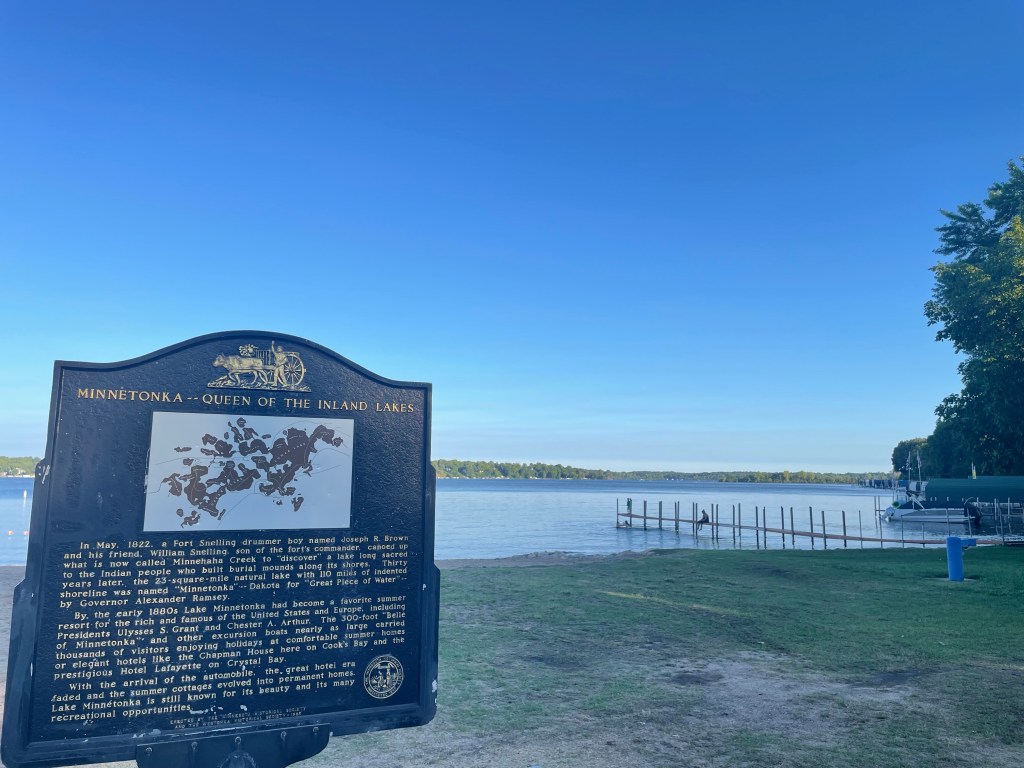

After changing into my strapless swimsuit in the car, I snapped a few soggy-haired selfies of my decolletage submerged in the mystical Minnetonka, but the results were nothing approximating Apollonia. I once asked myself, while reading in Prince’s biography about his sexually voracious early years, “Would I fuck Prince?” The better question, I soon realized, was “Would Prince have wanted to fuck me?” As omnisexual as he was, I wasn’t exactly his type. The closest I may have gotten was the lyric from “Little Red Corvette” that still thrills me, but I’m not even sure I would rank: Prince saw a lot of ass.
Girl, you’ve got an ass like I’ve never seen
And the ride, I said the ride is so smooth, you must be a limousine
Regardless, I said a splashy prayer to Prince to purify my sexual hang-ups, then drove back to the hotel, the windows of my Little Red Rental rolled down as I circumnavigated Lake Minnetonka in the fading sunlight. I rinsed off in the hotel shower and went for a solo patio dinner and ice cream, telling myself I would hit the hotel fitness center in the morning.
Time got away from me, and in my best efforts to look good for Prince and pack up the Little Red Rental, I failed to stop by the fitness center the next morning. “No matter,” I thought. “Prince doesn’t care if I work out.” I did manage to swing by the inclusive hotel breakfast twice—an early reconnaissance mission to snag the rare items that inevitably run out (in Chanhassen, string cheese) and again to grab something basic for the road (the last tub of yogurt, peach flavored), both times tanking up on coffee. I wore rings on half my fingers, one of which still had a price tag from the upscale secondhand store in St. Cloud (alas, they had no raspberry beret; I feel it is a missed opportunity for every thrift store not to stock up on these). I knew I would be fidgety without my phone, notoriously verboten at Paisley, so I left the price-tag string knotted on the ring: it was purple after all. I wore my lucky, purple-inclusive peacock dress and, of course, purple panties.
She wore a raspberry beret
The kind you find in a secondhand store
Another detail I remember from The Beautiful Ones introduction makes my heart swell. When the writer is finally picked up from the Country Inn & Suites and arrives at Paisley, he sees Prince standing alone outside, “ready to introduce himself.” That humble moment of politeness, Prince waiting to introduce himself to his guest, always stuck with me. He seemed so sweet, not at all the trickster of Minnetonka.
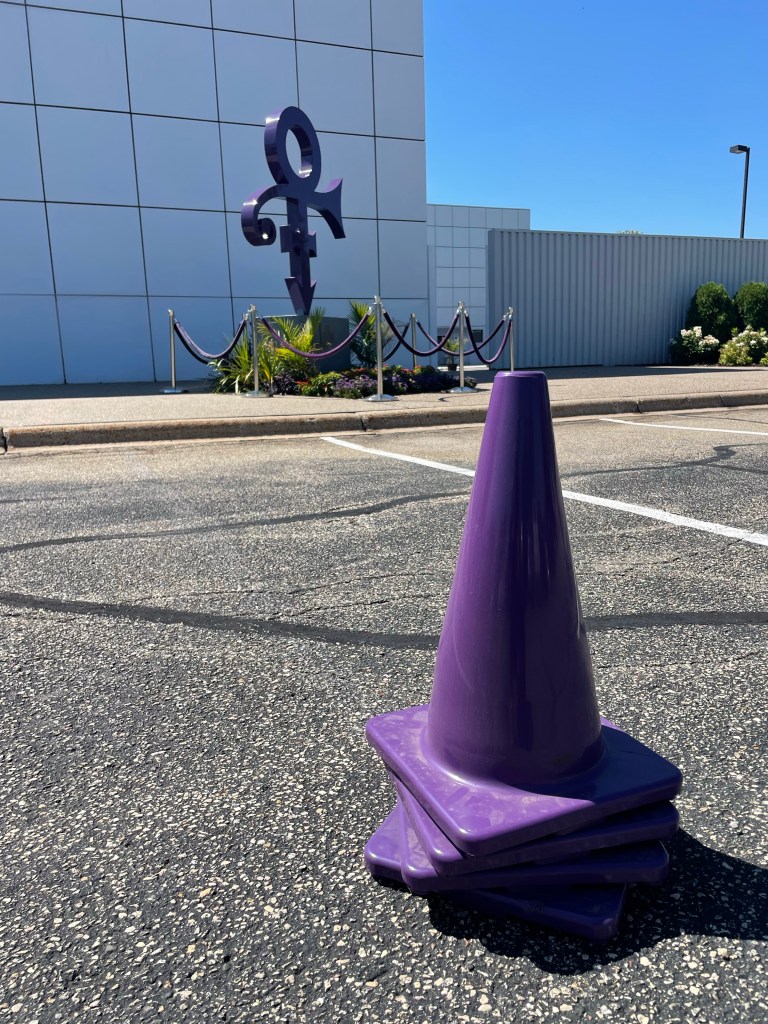

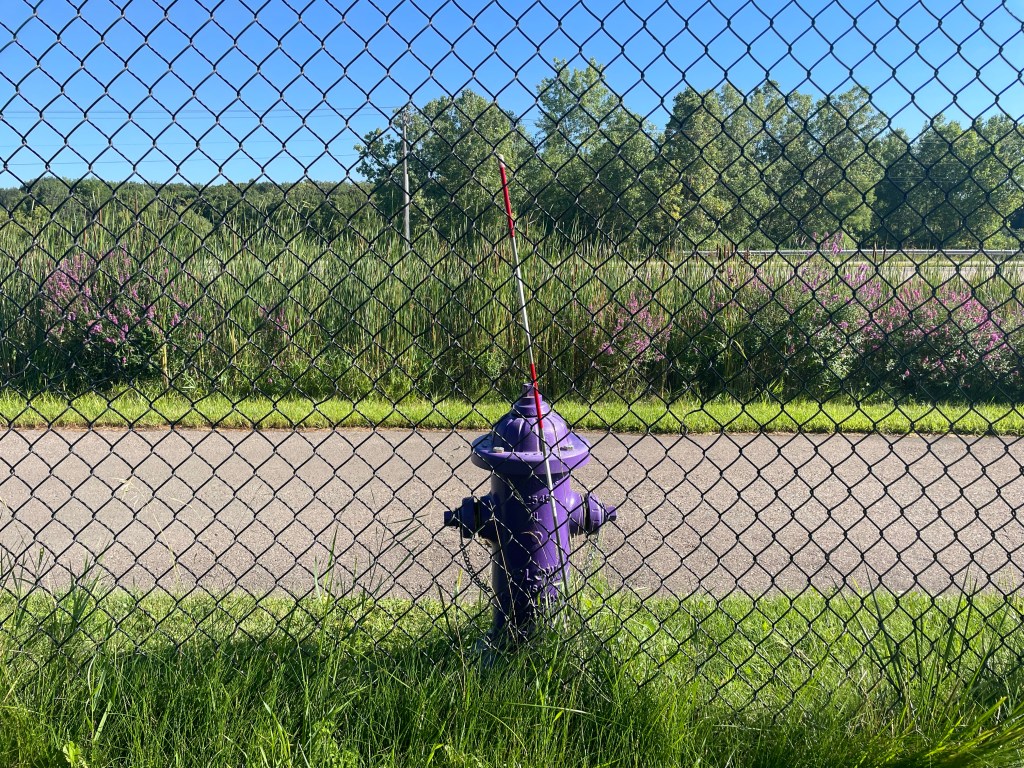
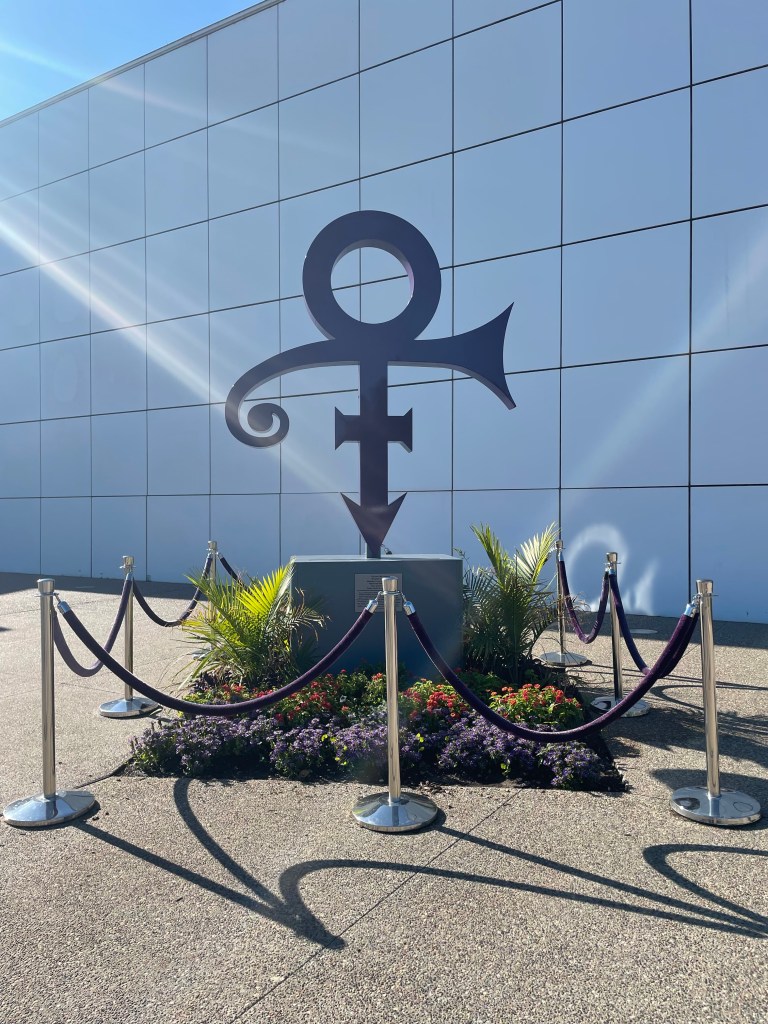

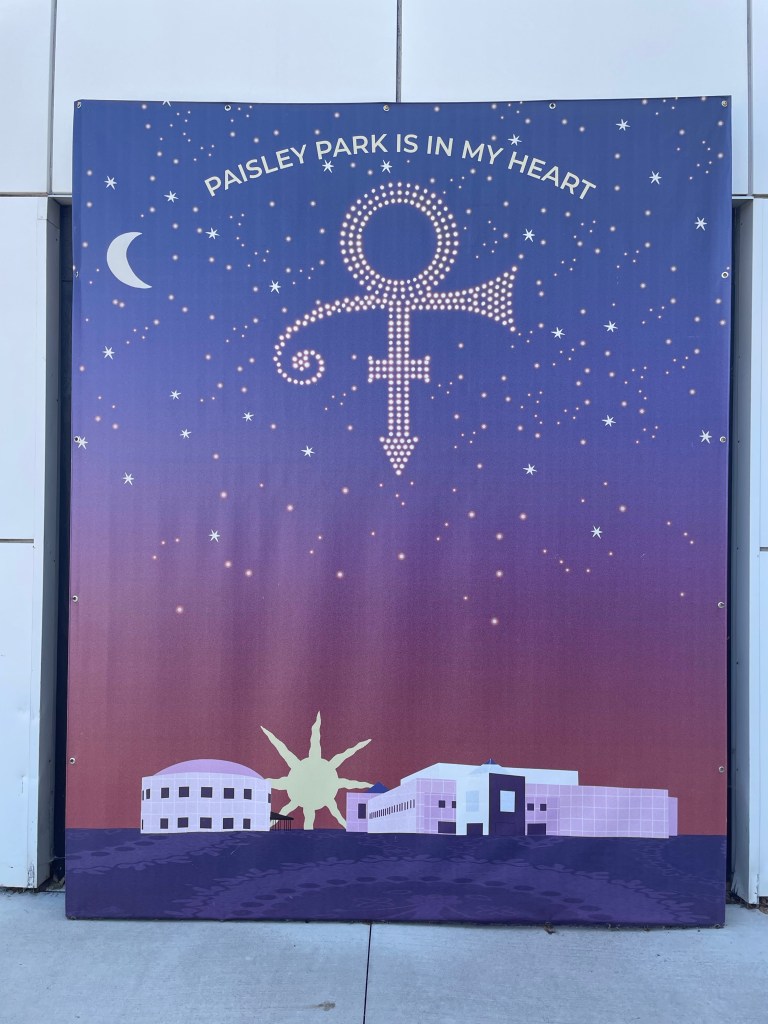
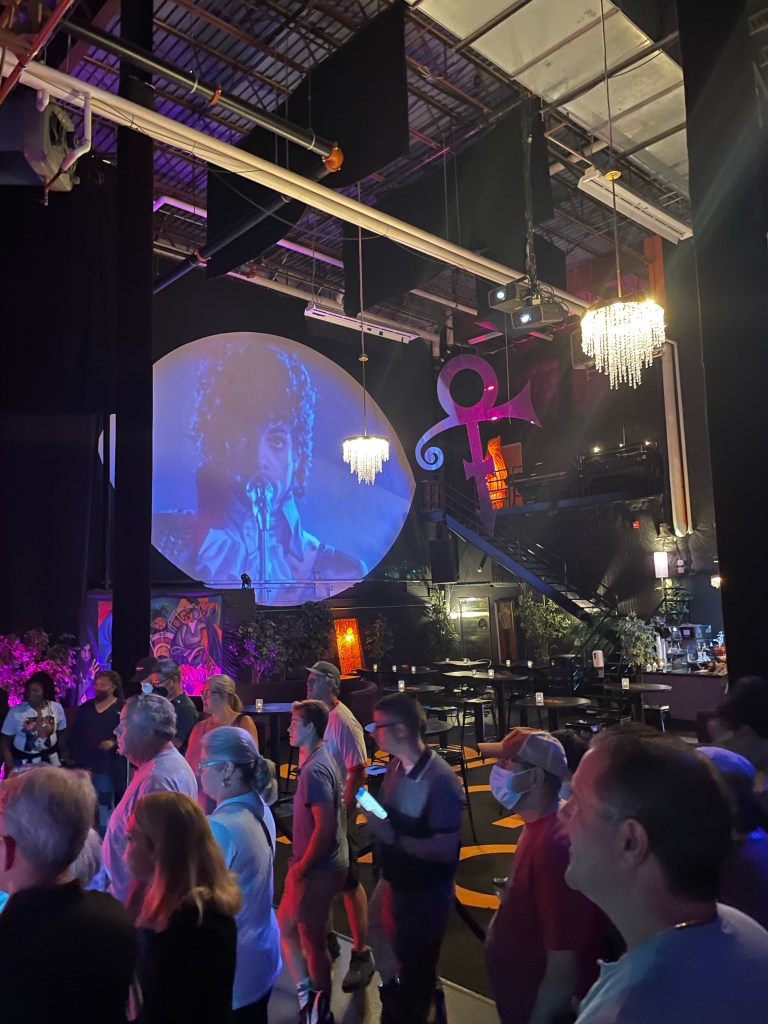
The theme song for my visit to Paisley was a surprise, though pleasant: “I Feel for You.” I’m not sure where I decided this; in the car on the way there or in the lobby of Paisley Park, looking up at the starlit sky painted on the recessed ceiling lined with piano keys. This reception room was used as a holding area for those of us on the tour, our phones already locked into personal pouches that would prevent us from prodding too much around Prince’s “creative sanctuary.” Still, I had already snapped copious photos of the love symbol out front and the delightful purple fire hydrant just outside the chainlink fence, though I failed to get the love symbol branded on to the city’s electrical transformer near the gatehouse.
“Everyone on the tour before us was purple from head to toe,” the woman next to me said. “Even their hair, some of them.”
“Yeah, that had to have been the VIP tour,” I responded, thumbing the purple string on my ring. I had asked her about the phone number she provided upon entry; it started with a 512. It turned out, she had lived in my college town for 17 years and kept the area code, rapidly becoming a hot commodity in a new Austin full of 737s.
“We get a lot of Texans here,” the Paisley Park tour guide, Tyler, told me later over the sounds of the live doves cooing in their cage on the second floor above us. I did not follow up on why this might be, but if some state-centric publication wants to pay me to find out, I will gladly undertake that research.
Inside Studio A, Tyler showed us the drum pedals and the synthesizer that were Prince’s weapons of choice; they are most clearly heard in the intro to “When Doves Cry.” Tyler also told us how Prince often played basketball in Studio C, which is currently occupied by a photography display. “He was known to play in heels,” she nodded, alluding to the Dave Chappelle sketch, as well as the Beautiful Collection of 300+ pairs of Prince’s shoes on display elsewhere in the building. I overheard a question about his workout habits and leaned in just in time to hear Tyler say: “Oh yeah, he was ripped.”

In the Beautiful Collection room, which bears more than a passing resemblance to Carrie Bradshaw’s closet, I observed the friction damage and broken heels, listening to one of his favorite shoe designers talk about vegan materials. Prince had started his career in four-inch heels and gradually worked his way down to three-inchers, but he always preferred the bootie, a style also favored by my late mentor, who gave me 54 pairs of her own shoes when she retired. I said a prayer for her in front of the shoes, and, when Tyler asked the last person out to shut the door, I made sure that person was me. I ripped off the purple string and dropped it on the carpet as an easily vacuumed offering and a thank you to Prince.

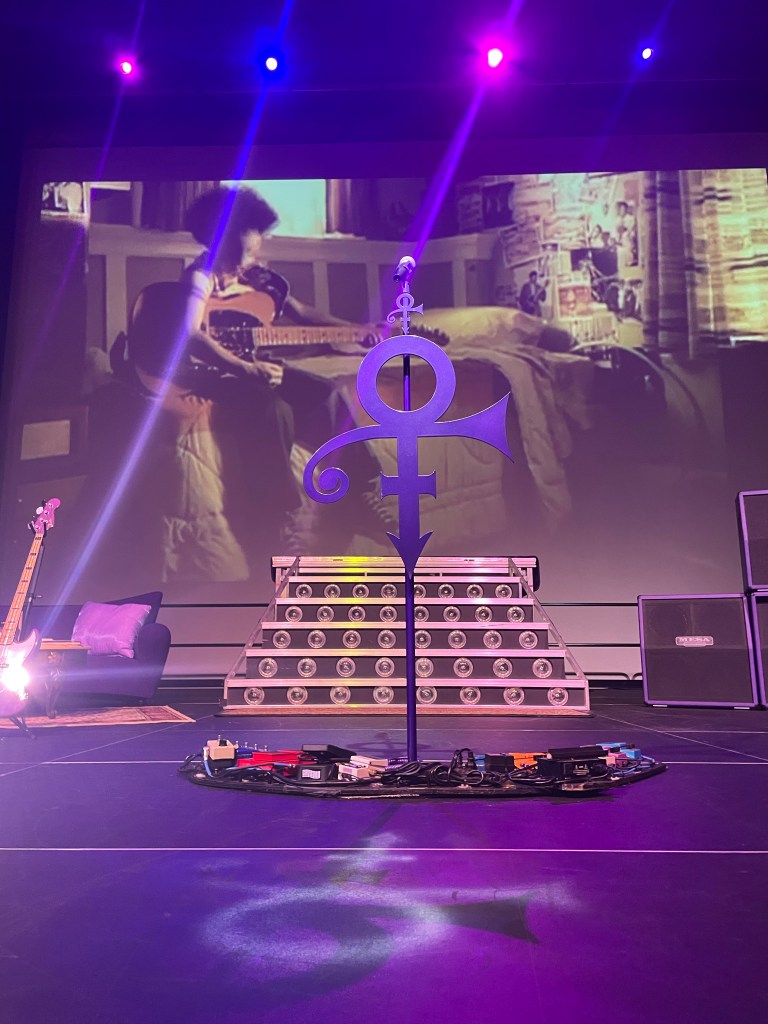
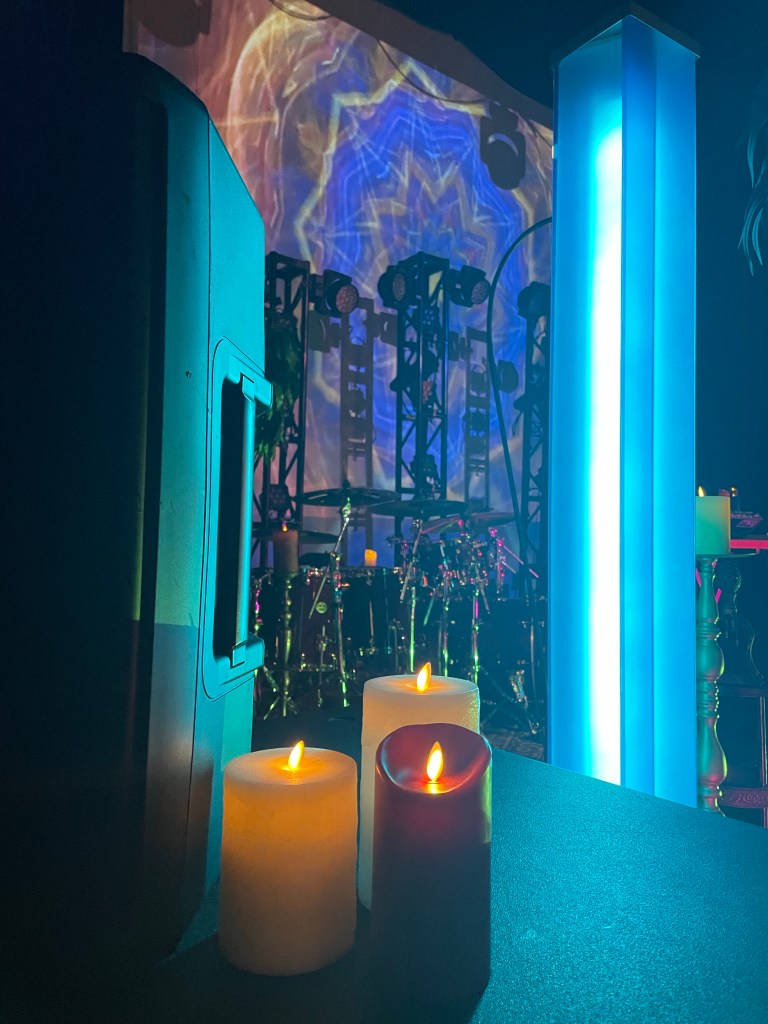

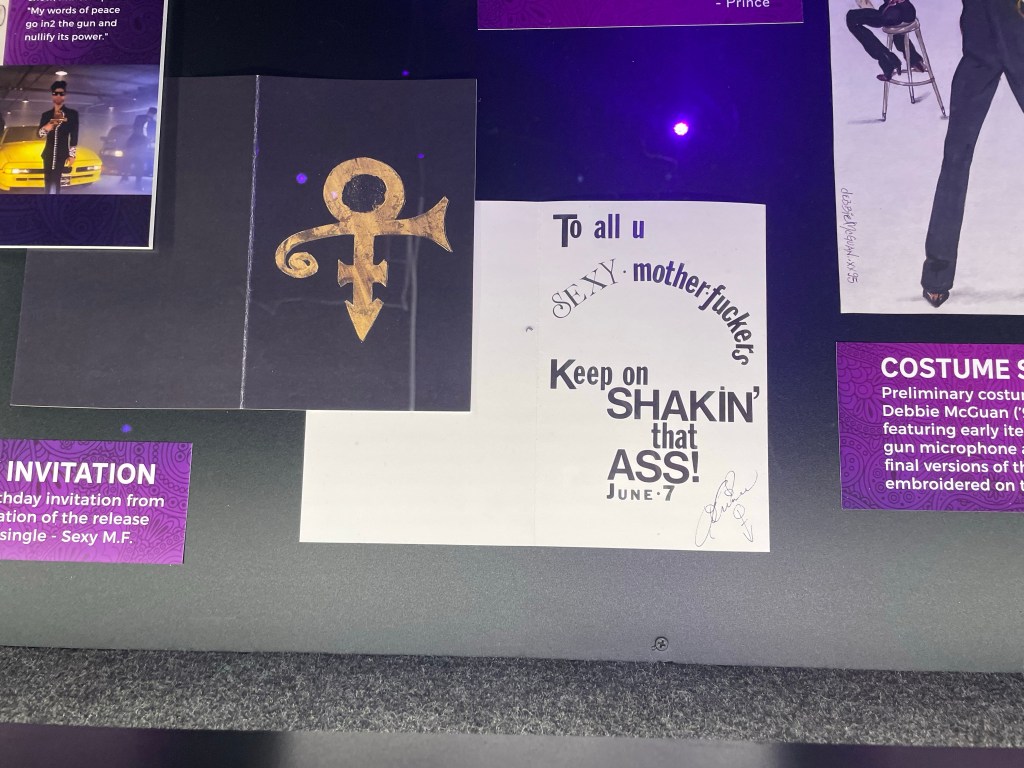

Tyler unlocked our phones for the soundstage, where clips of Prince’s greatest performances played on the screen surrounded by several of his cars and motorcycles. The tattooed couple from Tennessee started dancing together, possibly to “I Feel for You,” but I can’t really remember because what happened next was even more moving. During the Super Bowl performance of “Purple Rain” in the purple rain, the stage lighting inside Paisley Park swept over our faces, and I found myself crying. “Can I play this guitar?” he asked as we all sang along, 15+ years after he originally commanded it. Then the tour was over, the purple velvet rope moved aside, and we were left to wander around the NPG club for as long as we wanted. We now had access to our phones, a coffee bar, restrooms, purple sofas, and the giftshop.
As badly as I wanted the Snickers latte special, named after Prince’s favorite snack, it was entirely too sweet, and there was only one barista on duty. She didn’t have drip coffee brewed, but upon ordering the quickest Americano I could to pair with my locally made turtle cheesecake (Cheese Cake Funk, a Black-owned business and another favorite of Prince), I was delighted to find the individual tubs of Coffee Mate creamers included a flavored option: Snickers. I sat with my coffee and snapped photos for as long as I could—that is, until the next tour group finished their tour.
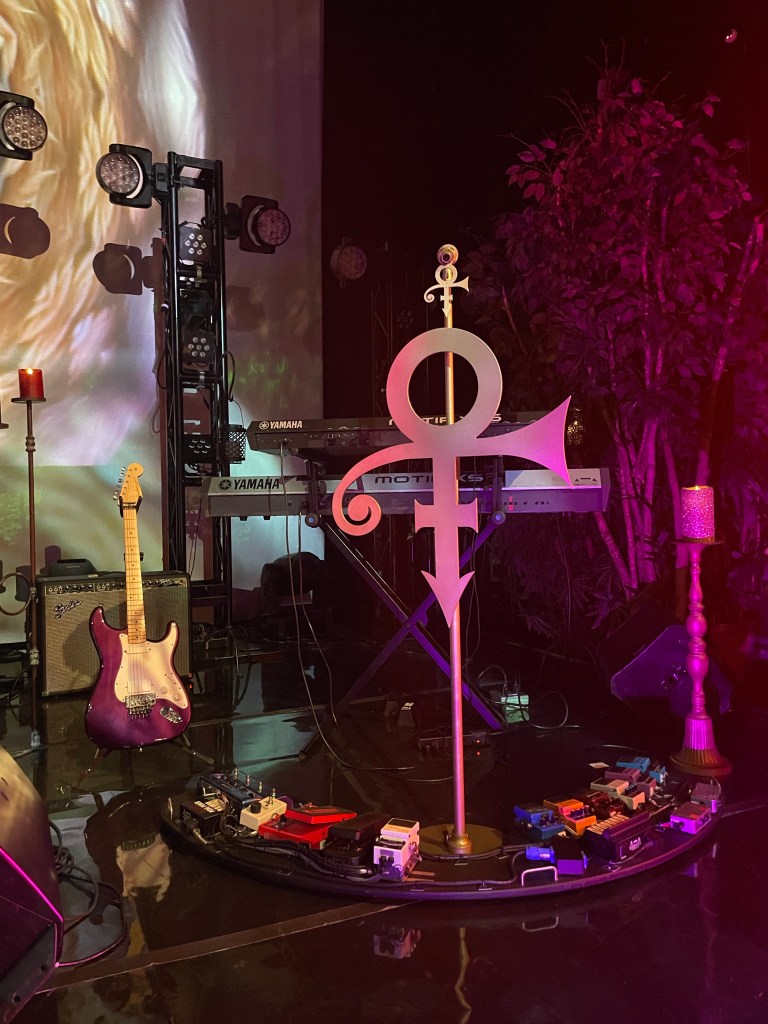

The giftshop was a disappointment in that I would have gladly paid up to $50 for an officially merchandised Starfish & Coffee mug like I had seen in the Prince shrine back in the hotel (and countless places online; the point is not availability but that the money go where he intended). Also, the two tote bags I liked were from past exhibits I had not personally visited, which felt like a poser purchase until I was overwhelmed with such non-buyer remorse back in Texas that I went on the Paisley Park website, where they are sadly not available for purchase. The only Beautiful Collection swag was a poster, which I neither liked nor needed, but I got some love symbol zipper pulls, just like the ones on most of Prince’s booties.
I also surreptitiously flipped through a copy of The Beautiful Ones off the stack in the back of the giftshop. My own copy, purchased from an independent bookseller on the day of publication, is packed away in storage. Though I had no intention to buy, I did want to reread the passage about the hotel, and this would be my only chance for a while. My eye scanned the page, including this sentence: “One of Prince’s aides told me he’d lived there for so many years that he’d broken the recumbent bicycle in the hotel’s fitness center.”

I could not believe I had forgotten this detail. I did not stop to ask why Prince was living in the “unremarkable chain hotel”; I assumed there were some renovations happening at Paisley Park. Maybe the roof was being repaired. Regardless, I made it back to the hotel five minutes before noon, just enough time to use my still-active key card to get into the fitness center and plant my ass on the bike.
It turned out, Prince did care if I worked out, and I did a solid minute of recumbent bicycling in my peacock dress and gold flipflops, giggling and snapping photos. I would be back in Texas 18 hours later, having driven straight through six states and continuing to listen to Prince at full volume through two of them. I arrived in time to get a few hours of sleep, then return the Little Red Rental to its rightful owners.
Only a few days later, looking at my photos of Paisley Park, did I notice the pronouns. He’d lived in the hotel, he’d broken the bike… I had assumed the “he” in question was Prince, but upon careful reading while not standing in a giftshop swaying my hips to the music, I saw that Prince’s aide was the antecedent to the pronoun in question. This is literally stuff I teach at the college level, clear pronoun antecedents, but since the Paisley Park employee mentioned in the preceding paragraph is a she (“Sometimes you gotta femme it up”) and, well, the love symbol is a mixture of male and female, a little Prince pronoun confusion is perfectly understandable.
I’m not a woman
I’m not a man
I am something that you’ll never understand
It was the wrong Minnetonka. Prince had not stayed in the hotel or broken the recumbent bike; that was just my wishful thinking and perhaps guilt that I had not availed of this particular hotel’s fitness center. But in leading me to the wrong Minnetonka, Prince had successfully gotten me on the bike. And we went riding.

Not in Kansas Anymore

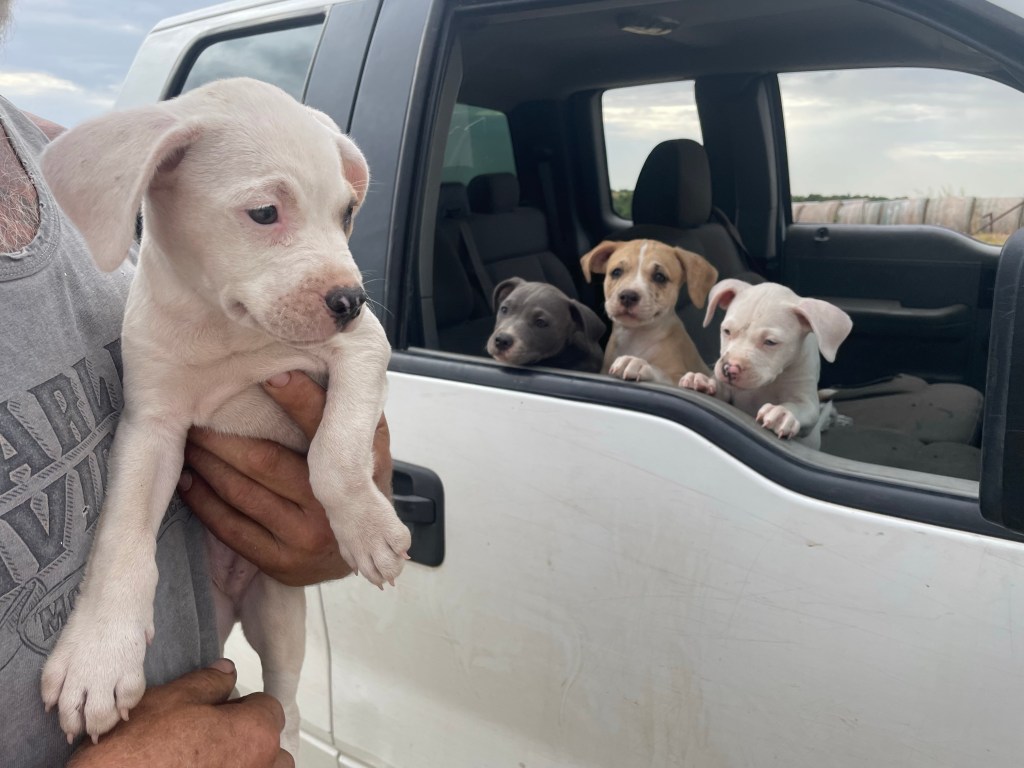
North of the Texas state line, parts of I35 become a toll road. This was, and is, a shock to me, like charging for air or water. But since I had already aroused the car rental company’s suspicions by slapping a paddle board atop my borrowed Chevy Spark and did not know how to navigate a toll payment with a rental lest it be one of those “pay by mail only” situations, I opted for the “avoids tolls” route on my navigation app. This took me through some scenic views and small towns, both charming and not: I found a cheap little roadside motel in one, got offered a roll in the hay and a pitbull puppy in another. “You shore are pretty.”
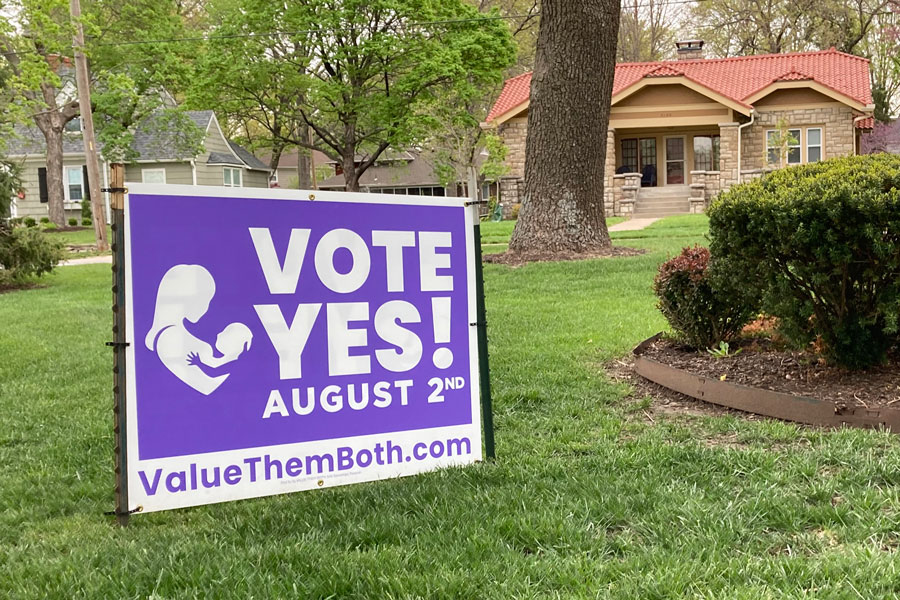
As I approached Wichita from the south, still avoiding I35, I began to roll through sweet little pastoral scenes of farmland known as Belle Plaine—pretty plain. Dark green leaves, low to the ground, indicated a crop I can only assume was cotton. Occasionally, a purple political sign would pop up in one of the farmhouse yards. Moving by at a fair clip, though nowhere near as fast as I would on I35, I could see what looked like the silhouette of a young girl with her head bent over a book. It is a message I can support. The encouragement to VOTE YES loomed large enough for me to read, even though the finer points of the sign escaped my attention, and I assumed it was a slam-dunk of a bond proposal to help local schools.
Rolling into Wichita proper, I rejoined a highway, though somehow still not I35. On an overpass bridge surrounded by chainlink fence, I saw three figures, what appeared to be college students, two female and one male, though I was moving much faster at this point and hate to assume someone’s gender. It was relevant, however, but I would learn too late: as one of the females, the white woman, made the international “honk your horn” motion, the other held up a tiny carboard sign with lettering so dark and small I struggled to read even as I passed directly beneath them: MY BODY MY CHOICE. A message I can support but known too late, and I failed to toot my horn as I blasted into downtown.
I had been catching up on the news, learning days late that the president had a rebound case of COVID (I had not known he had a first case) and had started hearing about Kansas being the first to vote on banning abortion at the state level. It had to do with an amendment to the state constitution. Once I exited the highway and began looking around at a pedestrian pace, I learned that the purple sign was not a school bond election at all, but pro-life propaganda paid for by a PAC called Value Them Both, whose name was in fact written across the bottom of the sign, which depicted not a little girl reading but a mother, obviously a white woman, holding a baby in her arms.

There were also bumper stickers advising me to VOTE NO ON AUGUST 2, the pro-choice argument to keep the amendment in the state constitution. I finally found some of the pro-choice printed propaganda on the ground outside my hotel. I picked it up, thinking it was a group photo someone had printed out and lost; the doorhanger hole was punched right through one of the women’s faces. Both sides claimed the other was using scare tactics, a topic explored by a podcast I listened to the next morning as I ran along the river toward the Keeper of the Plains. (“He’s a keeper!” winked the article I skimmed on best trails in Wichita.)

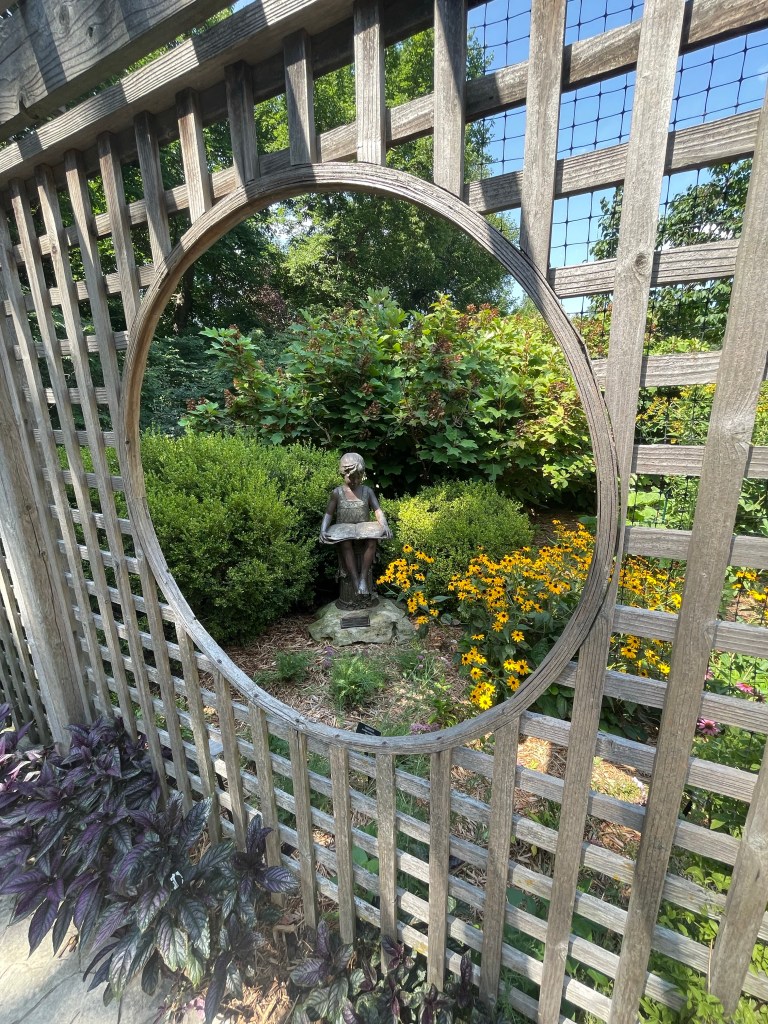
I visited Botanica, the botanical garden that by stroke of luck also featured a traveling Washed Ashore installation. I managed to find all 13 pieces and still avoid the children’s garden full of screaming kids. I took a picture of the sleeping troll bridge with a pair of children’s flipflops abandoned next to the troll’s mouth and captioned it “Look, he ate one!” for my friend back in Texas who is, incidentally, a parent by choice. In search of solitude, and shade, I found an educational garden with a lovely sculpture of a young girl with her head bent over a book—a message I can support. At the time, I was in the middle of Madeline Miller’s Circe, about the witch of Greek myth who firmly regulated her own reproductive system until such time as she chose to have a child with Odysseus.


I followed a Hyundai with a VOTE NO bumper sticker out of the museum district, then watched local drivers disrespect each other all the way to my salad spot for lunch. I stopped into CVS or Walgreens, whichever was next door, and picked up two newspapers while I was there. USA Today had the Kansas story on the front page; The Wichita Eagle made no mention of abortion…that is, until I got to the last page, where an editorial stated simply that the poorly worded bill was political chicanery and to vote no.
On my way out of town, I stopped by Eighth Day Books and wound up spending an hour combing the religious and secular titles, including at least two books on the concept of the week, hilarious to me given the name of the bookstore (and, upon reflection, the fact that I had just finished Four Thousand Weeks: Time Management for Mortals). I dug through the stacks and bought my first Marilynne Robinson. My rental car was blocked by the garbage truck, so I ended up taking a back street to the traffic light and saw a church with a sign out front: “Jesus trusted women, and so do we. Vote no.” A message I can support.
The newspaper editorial had mentioned both sides defacing each other’s messaging, and I saw evidence of this just down the street, where a community baseball field, somehow festooned with the Value Them Both signs on the infield fences—itself an egregious misuse of community space—had been graffitied to read NO where they had been printed to say Yes. Neither side looked good in this visual. I would soon realize I had left my wallet on the counter at Eighth Day, an almost exact recreation of the absentminded mistake I had made at Commonplace Books in Oklahoma City. If there is ever a place to lose your wallet mid-roadtrip, it is at the bookstore; both times, I recovered it unmolested.
Leaving Wichita, still not on I35 despite heading in the exact same direction, I saw a van with windows painted VOTE NO while I listened to NPR to try to put the amendment in context. When I got to Kansas City, I made sure to get a hotel on the Missouri side, where I saw on the news that the amendment had been soundly defeated. The next morning, over coffee and a life-changing savory bear-claw croissant at the Filling Station in Union Hill before my pilgrimage to Prospero’s Bookstore, I chuckled aloud while reading the local alt-weekly, The Pitch. The Letter from the Editor comprised a pro-choice personal narrative involving holding his girlfriend’s hand while she swallowed a Planned Parenthood-provided morning-after pill at Disneyland: “We were standing in front of Sleeping Beauty’s Castle—its shadow cast over us, and dozens of screaming children with beleaguered parents formed a Greek chorus of reminders that we were absolutely making the right decision.”

 Mandy Shelton